
No technical ceramic is used more widely than alumina. It insulates the spark in every combustion engine, carries the circuits of power electronics, grows the world's LEDs on its single-crystal form, coats the separators inside lithium batteries, and grinds hardened steel on the shop floor — all from one chemistry: aluminum and oxygen.
Eata Energy covers the complete alumina chain. We supply calcined, activated and nano alumina powders at 3N–4N purity, sintered ceramics from 96% to 99.9%, sapphire single crystals, sputtering targets, abrasive grains and engineered components — every lot backed by a full chemical certificate.
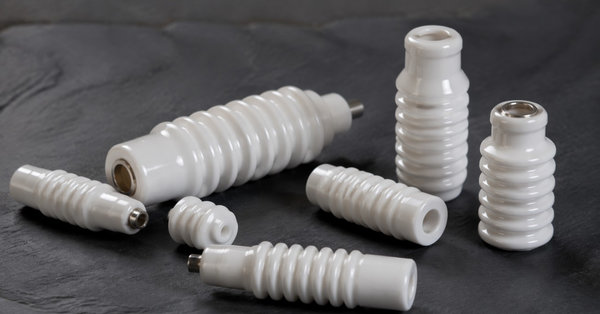 High-alumina ceramic insulators — the classic high-voltage dielectric
Aluminum oxide (Al₂O₃, alumina) is produced from bauxite through the Bayer process and reaches engineering in two distinct personalities. As α-Al₂O₃ (corundum) it is thermodynamically stable, melts at 2072 °C and ranks 9 on the Mohs scale — second only to diamond among common materials. As transition aluminas (γ, θ, δ) it offers enormous internal surface, 150–350 m²/g, that catalysts and adsorption processes live on. One element pair, two toolkits: the hardest structural oxide and one of the most active functional surfaces in the chemical industry.
| Grade | Composition / Form | Signature Property | Typical Uses |
| Calcined Alumina | α-Al₂O₃, 99.5–99.9% | Low soda, sinterable | Technical ceramics, spark plugs, refractories |
| Activated Alumina | γ-Al₂O₃ | 150–350 m²/g surface | Adsorbents, catalyst supports |
| Boehmite | AlOOH platelets | Soft, endothermic >300 °C | Separator coatings, flame retardants |
| Nano Alumina | 99.9–99.99%, 20–100 nm | Ultrafine, dispersible | CMP slurries, coatings, separator layers |
| 96% Alumina Ceramic | 96% sintered body | 24–25 W/m·K, glazeable | Thick-film substrates, insulators |
| 99.5–99.9% Ceramic | High-purity sintered body | 29–35 W/m·K, up to 550 MPa | Thin-film/DPC substrates, chamber parts |
| Sapphire | Single crystal >99.99% | Clear 0.15–5.5 μm, Mohs 9 | LED wafers, optical windows |
| White Fused Alumina | ≥99% α-Al₂O₃ grains | Mohs 9, self-sharpening | Abrasives, blasting, refractories |
Compositions and particle-size distributions are lot-certified; custom values available on request.
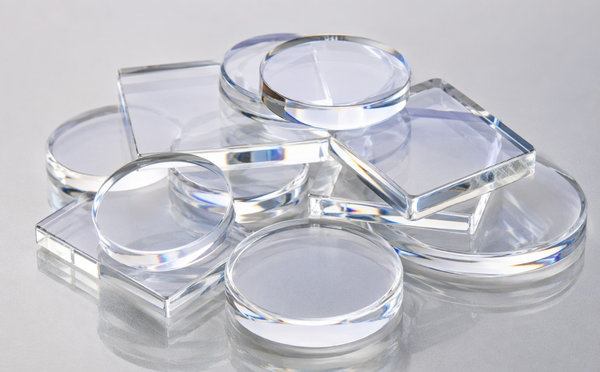 Polished sapphire windows and wafers from Eata Energy stock
Alumina owns the ceramic substrate business on a simple value proposition: near-AlN insulation at a fraction of the cost. Thick-film circuits run on 96% alumina (24–25 W/m·K, 350 MPa flexural strength), while thin-film and direct-plated-copper work moves to polished 99.6% material at 29–35 W/m·K and up to 550 MPa. Direct-bonded-copper alumina is the industry-standard insulator inside IGBT and inverter modules for electric vehicles, photovoltaic inverters and fast-charging infrastructure — a market growing steadily as power electronics electrify everything. DPC versions on mirror-polished 99.6% plates now serve 5G and 77 GHz automotive radar with 25 μm line resolution.
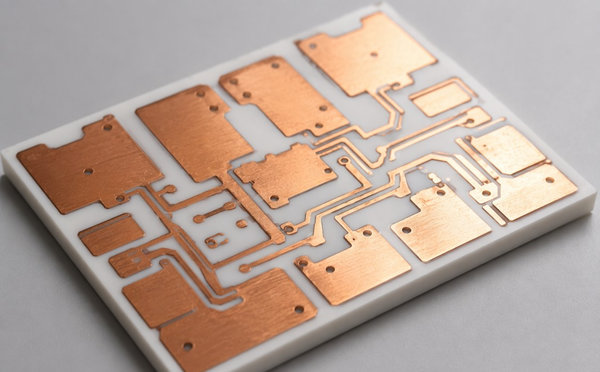 Direct-bonded-copper alumina substrates for power modules
Grown as a single crystal, alumina becomes sapphire — and the lighting industry is built on it. More than 80% of blue and white LEDs are epitaxially grown on c-plane sapphire wafers by MOCVD above 1000 °C, where the crystal's lattice template, transparency and thermal stability make high-brightness GaN devices economical. The same wafers carry RF and SAW filter circuits; polished windows transmit from deep UV to 5.5 μm for sensors and laser systems; and sapphire's Mohs-9 surface protects camera lenses and instrument covers that glass would scratch in a week.
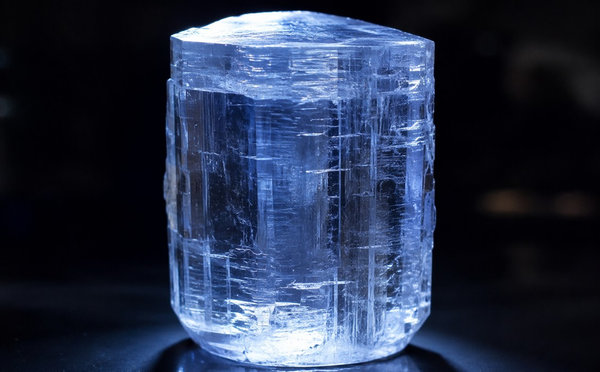 Laboratory-grown sapphire boules for LED and optical wafers
Inside a lithium cell, a few micrometers of alumina chemistry stand between normal operation and thermal runaway. Ceramic-coated separators — boehmite or fine alumina slurries on polyethylene or polypropylene film — keep their shape above 150 °C where bare polymer shrinks and shorts. Boehmite dominates with roughly 68% of coating volume: its platelet particles build uniform 1.5–3 μm layers, its Mohs-3 softness spares coating equipment, and above 300 °C it dehydrates endothermically, actively absorbing heat when a cell needs it most. Major cell makers have standardized on the material for EV and energy-storage lines.
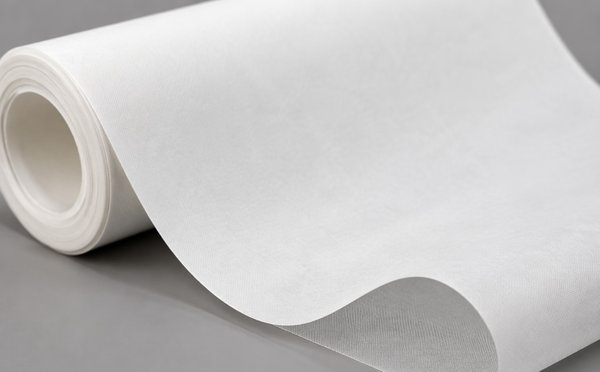 Boehmite ceramic coating keeps lithium battery separators stable at temperature
The spark plug remains alumina's highest-volume precision product: an insulator body of 92–95% calcined alumina, fluxed and glazed, holding tens of kilovolts inside a combustion chamber at 1000 °C, cycle after cycle, in engines from lawn mowers to aircraft. The same dielectric physics scales up to high-voltage bushings, ignition electrodes for industrial burners, sensor bodies and insulating feedthroughs — applications where glaze quality and zero water absorption separate reliable ceramics from field failures.
Wafer fabs consume high-purity alumina in bulk. Chamber liners, showerheads, electrostatic chuck bodies and focus rings in 99.5–99.9% alumina resist fluorine and chlorine plasmas that erode quartz and metal; ceramic end-effectors handle wafers without contamination; and alumina CMP slurries polish the wafers themselves. Purity is the whole story here — sodium and iron in the tens of ppm can disqualify a batch — which is why our semiconductor grades carry full trace-element certificates.
Fused above 2000 °C in an electric arc furnace, white fused alumina (≥99% Al₂O₃) becomes the precision abrasive for hardened steels: sharp, self-sharpening grains in FEPA sizes from F12 macrogrits to micron powders for grinding wheels, blasting media, lapping and CMP. Coarser fractions feed high-alumina refractories and investment-casting shells, while at the other end of the activity scale, γ-alumina supports carry platinum and palladium in auto-exhaust and petrochemical catalysts, and activated alumina beds dry gases and scrub impurities from process streams.
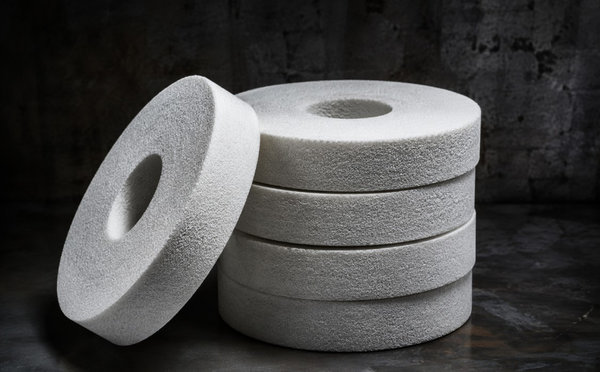 White fused alumina wheels for precision grinding
Alumina looks like a commodity until a batch fails: 0.1% extra sodium kills a sapphire growth run, and a soft granule distribution ruins a substrate casting. Eata Energy treats alumina as a family of engineered materials rather than a bulk chemical — every grade defined by its own purity, phase and particle specification, every lot certified, and the ceramic, crystal and powder sides of the business held to the same quality system.
Need a specific surface area, a tailored particle-size cut, or a ceramic body tuned for your sintering profile? We customize calcination temperature and soda content, mill to your D50/D97 targets, adjust BET on activated grades, and supply boehmite with specified platelet morphology for coating lines. Substrate dimensions, sapphire orientations, target bonding and machined insulator or wear-part geometries are all made to drawing. Send the specification — we respond with a technical proposal, not a stock answer.
| Catalog Number | Product Name | Order | Quantity |
|---|---|---|---|
| OCAO-0001 | Single-Crystal Fused Alumina Abrasive | Inquiry | |
| OCAO-0002 | Aluminum Oxide Powder, White Crystalline Ceramic Grade | Inquiry | |
| OCAO-0003 | High-Purity Aluminum Oxide Nanopowder, 13 nm, 99.8% | Inquiry | |
| OCAO-0004 | Platinum on Alumina Catalyst, 1 wt.% Pt, 3.2 mm Pellets | Inquiry | |
| OCAO-0005 | Palladium on Alumina Catalyst, 0.5 wt.% Pd, Spheres | Inquiry | |
| OCAO-0006 | Aluminum Oxide Nanoparticle Screen-Printing Paste | Inquiry | |
| OCAO-0007 | 99.99% Aluminum Oxide Ceramic Sputtering Target (Al2O3), White, 3.98 g/cm3 | Inquiry |
For Research or Industrial Raw Materials, Not For Personal Medical Use!
|
There is no product in your cart. |

Eata Energy is your trusted partner for high-performance energy materials, customized R&D support, and a stable global supply chain. We support you every step of the way in energy innovation.
Enter your E-mail and receive the latest news from us.
Copyright © Eata Energy. All rights reserved.
