
Eata Energy supplies metal halide materials for energy conversion, semiconductor processing, optoelectronics, electrochemistry, catalysis, crystal growth, and advanced inorganic synthesis. The portfolio covers chlorides, bromides, iodides, and fluorides across alkali, alkaline-earth, transition-metal, main-group, and rare-earth chemistries, with grades and physical forms selected around the customer's process rather than a one-size-fits-all specification.
Metal halide performance can change with oxidation state, water content, trace-metal profile, residual free halogen, particle size, solubility, and packaging environment. For that reason, Eata Energy evaluates each request using the intended reaction route, deposition method, target phase, solvent system, temperature window, and analytical requirements. Materials may be considered as anhydrous or hydrated salts, powders, granules, beads, crystals, or formulated solutions when technically suitable.
A metal halide combines a metal cation with one or more halide anions. The broad family includes simple binary compounds such as lithium fluoride, magnesium chloride, zinc bromide, lead iodide, and lanthanum bromide, as well as mixed-halide, oxyhalide, doped, and complex compositions. Their chemical diversity supports roles as ionic sources, reaction intermediates, crystal-growth feedstocks, electrolyte components, thin-film precursors, catalysts, fluxes, and building blocks for functional materials.
The correct material is defined by more than its chemical formula. Two lots with the same nominal identity may behave differently if hydration, oxidation state, insoluble residue, trace metals, or particle morphology are not controlled. High-purity and moisture-sensitive programs therefore benefit from a specification that links analytical limits to the actual process objective.
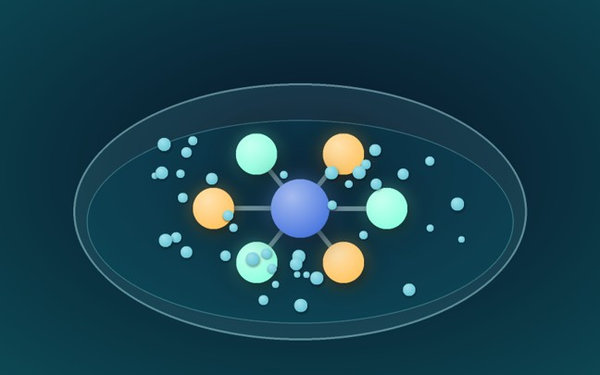 Figure 1. Conceptual view of metal-halide coordination and solvation in a precursor solution.
The examples below illustrate common search terms and material families within the category. Availability, grade, hydration state, and packaging are confirmed for each individual inquiry.
| Material family | Representative names and formulas | Typical specification focus | Common application areas |
| Alkali and alkaline-earth halides | Lithium fluoride (LiF), lithium chloride (LiCl), lithium bromide (LiBr), lithium iodide (LiI), magnesium chloride (MgCl2), calcium fluoride (CaF2), barium fluoride (BaF2) | Water content, trace metals, crystal grade, powder or granule form | Electrochemistry, solid-state synthesis, optical materials, fluxes, coatings |
| Transition-metal halides | Titanium chlorides, vanadium chlorides, chromium chloride, manganese chloride, iron chloride, cobalt chloride, nickel chloride, copper chloride, zinc chloride | Oxidation state, anhydrous grade, metal basis, residual free halogen, particle size | Catalysis, materials synthesis, electroplating research, battery-material preparation, thin films |
| Main-group and semiconductor halides | Aluminum chloride, gallium chloride, indium chloride, tin chloride, tin bromide, tin iodide, lead bromide, lead iodide, bismuth iodide, antimony iodide | Electronic-grade purity, solubility, moisture control, trace metals, crystal phase | Perovskites, semiconductors, optoelectronics, vapor or solution processing |
| Rare-earth and yttrium halides | Lanthanum chloride, lanthanum bromide, cerium chloride, neodymium chloride, yttrium chloride, ytterbium chloride, rare-earth fluorides | Anhydrous form, oxygen-containing impurities, rare-earth impurity panel, crystal-growth suitability | Optical crystals, scintillators, phosphors, lasers, magnetic and catalytic materials |
| Fluoride materials | Lithium fluoride, magnesium fluoride, calcium fluoride, barium fluoride, aluminum fluoride, yttrium fluoride, lanthanum fluoride | Optical loss, oxide content, particle size, sintering or evaporation grade | Optical coatings, windows, ceramics, fluoride crystals, solid-state reactions |
| Mixed, doped, and complex halides | Mixed chloride-bromide systems, mixed iodide-bromide systems, doped halide crystals, double halides, selected oxyhalides | Composition ratio, dopant level, phase control, homogeneity, custom analytical limits | Bandgap tuning, luminescence, crystal engineering, specialty electrolytes, functional ceramics |
Metal-halide perovskite research frequently uses inorganic salts such as lead iodide, lead bromide, tin iodide, tin bromide, cesium iodide, cesium bromide, and selected rubidium or other alkali halides. These materials are combined with organic halide salts or other cation sources to form solution-processed or vapor-derived absorber compositions. Precursor purity, stoichiometry, solvent interaction, and crystallization behavior can influence film coverage, grain formation, residual phases, bandgap, and device consistency.
For a useful material discussion, identify the target perovskite composition, deposition route, solvent system, concentration, additive strategy, desired halide ratio, and any impurity limits that may affect the device. Eata Energy can review individual metal halides, coordinated precursor sets, and selected custom solution requirements for photovoltaic, LED, photodetector, and related thin-film programs.
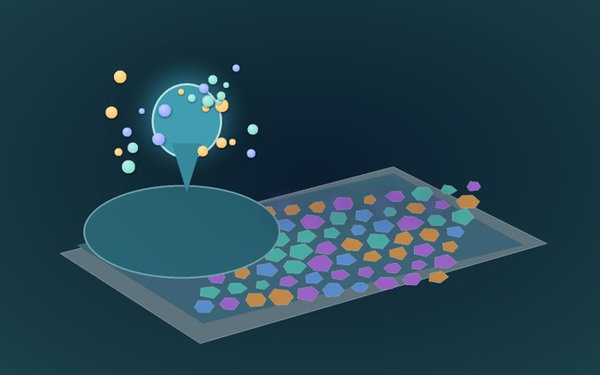 Figure 2. Controlled precursor composition and crystallization influence the formation of metal-halide perovskite films.
Metal halides are used in electrochemical research as ionic sources, synthesis precursors, flux components, or constituents of high-temperature salt systems. Lithium, sodium, potassium, magnesium, aluminum, transition-metal, and rare-earth halides may be evaluated for battery-material synthesis, conversion chemistry, ion-transport studies, electrodeposition, thermal storage concepts, or molten-salt processing. Suitability depends on electrochemical stability, moisture control, melting behavior, corrosion compatibility, and the impurity profile required by the system.
When a halide will contact an electrolyte, electrode, ceramic separator, current collector, or reaction vessel, the inquiry should identify the full chemical environment. This helps distinguish between a standard high-purity salt, an ultra-dry grade, a controlled-particle material, or a custom composition.
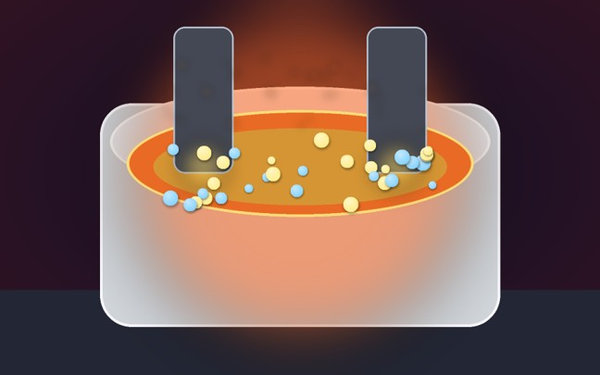 Figure 3. Molten halide media can support ion transport and high-temperature electrochemical research.
In solid-state, hydrothermal, solvothermal, and solution synthesis, metal halides provide a direct route to metal ions and can influence reaction temperature, nucleation, phase formation, particle growth, and residual anion content. Transition-metal halides are also widely studied as catalysts or catalyst precursors, while main-group and rare-earth halides support the preparation of semiconductors, phosphors, nanomaterials, ceramics, and mixed-metal compounds.
The preferred form depends on how the material will be introduced. Fine powder may improve mixing, granules or beads may reduce dust and moisture uptake, crystalline pieces may suit selected thermal processes, and solutions can support controlled dosing when the compound is stable and soluble in the chosen solvent.
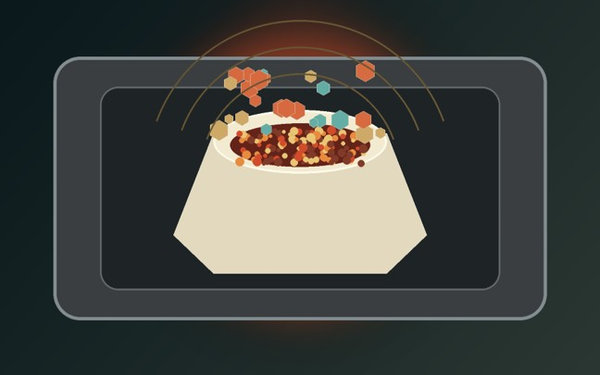 Figure 4. Solid-state processing converts selected halide precursors into targeted inorganic phases.
Rare-earth and alkaline-earth halides are important starting materials for optical crystals, scintillators, phosphors, infrared materials, and specialty photonic systems. Lanthanum, cerium, yttrium, barium, calcium, and related halides may require especially low oxygen-containing impurities, controlled moisture, high metal-basis purity, and careful packaging because small contamination levels can influence transparency, light yield, color centers, or crystal-growth behavior.
Crystal-growth inquiries should specify the target host composition, dopant identity and level, required batch size, preferred particle form, acceptable oxide or oxyhalide content, and any analytical data needed for qualification.
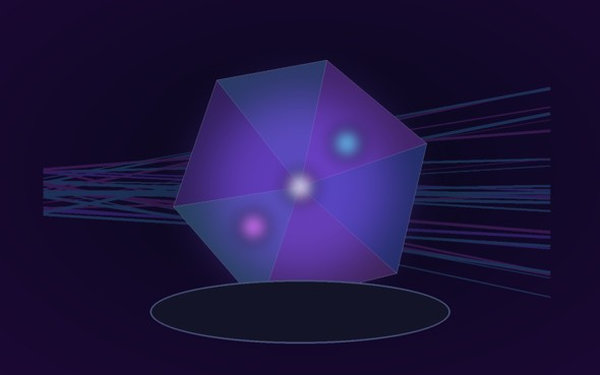 Figure 5. High-purity rare-earth halides are important starting materials for optical and scintillator crystals.
| Specification | Why it matters |
| Chemical identity and oxidation state | Different oxidation states can produce different solubility, reactivity, color, phase, and process behavior. |
| Purity basis and impurity limits | Assay alone may not describe trace metals, residual halogen, oxide, moisture, or insoluble material. |
| Anhydrous or hydrated form | Water can change molecular weight, handling, dissolution, reaction pathways, and thin-film quality. |
| Physical form and particle size | Powder, granules, beads, crystals, or pieces behave differently during weighing, mixing, melting, and transport. |
| Solubility and formulation | A clear and stable solution depends on compound identity, solvent, concentration, temperature, and filtration. |
| Thermal and phase behavior | Melting, sublimation, decomposition, phase transitions, and volatility affect deposition and solid-state processing. |
| Packaging and transfer | Moisture-sensitive or reactive salts may require packaging that supports clean, controlled transfer. |
| Documentation | Qualification may require batch-specific identity, assay, moisture, trace-metal, or phase information. |
A catalog grade may not match every process window. Eata Energy can evaluate custom metal halide requests involving alternative purity targets, specified trace-metal limits, controlled hydration, anhydrous preparation, selected oxidation states, particle-size adjustment, granulation, crystal form, dopant incorporation, mixed-halide ratios, and application-specific packaging.
Custom solution work may also be considered for compatible materials. Please provide the metal halide identity, solvent, target concentration, filtration requirement, water limit, pack size, storage conditions, and intended processing route. For mixed or doped systems, include the target composition, tolerance, phase requirement, and analytical acceptance criteria.
| Catalog Number | Product Name | Order | Quantity |
|---|---|---|---|
| SVDHM-0001 | Anhydrous Cerium(III) Chloride, 99.95% | Inquiry | |
| SVDHM-0002 | Zirconium Tetrachloride for Zirconium Processing | Inquiry | |
| SVDHM-0003 | Silicon Tetrachloride Fuming Liquid | Inquiry | |
| SVDHM-0004 | Yttrium Fluoride, 99.999%, White Powder | Inquiry | |
| SVDHM-0005 | Cerium(III) Fluoride, 99.99%, Custom Particle Size | Inquiry | |
| SVDHM-0006 | Neodymium(III) Fluoride, Rare-Earth Fluoride Material | Inquiry | |
| SVDHM-0007 | Beryllium Fluoride, 99.5%, 10 µm Powder | Inquiry | |
| SVDHM-0008 | Gadolinium(III) Fluoride, 99.999%, White Crystalline Solid | Inquiry | |
| SVDHM-0009 | Praseodymium(III) Chloride Hexahydrate, Hydrated Rare-Earth Chloride | Inquiry | |
| SVDHM-0010 | Terbium(III) Chloride Hexahydrate, 99.99–99.999% | Inquiry |
For Research or Industrial Raw Materials, Not For Personal Medical Use!
|
There is no product in your cart. |

Eata Energy is your trusted partner for high-performance energy materials, customized R&D support, and a stable global supply chain. We support you every step of the way in energy innovation.
Enter your E-mail and receive the latest news from us.
Copyright © Eata Energy. All rights reserved.
