
Metal evaporation materials are source feedstocks engineered for vacuum deposition, where controlled heating converts a solid metal into vapor and the vapor condenses as a thin film on a substrate. Material identity, purity, geometry and surface condition can all influence source loading, evaporation stability, film composition and repeatability.
Eata Energy supports metal evaporation material inquiries for research, process development and industrial coating programs. Customers can select from standard material entries in the product list or discuss composition, purity, dimensions and packaging requirements for a project-specific solution.
A metal that performs well in one evaporation setup may require a different geometry, source container or heating strategy in another. Low-melting metals, refractory metals and precious metals differ in vapor pressure, melting behavior, wetting, reactivity and compatibility with boats, filaments, crucibles or electron-beam hearths. For this reason, purchasing decisions should be based on the complete deposition process rather than chemical purity alone.
The most useful product specification connects the feedstock to the intended film. A request for aluminum pellets, for example, should also define the deposition method, preferred pellet size, purity basis, critical trace elements, quantity and source geometry. This helps reduce ambiguity and supports more consistent evaluation between material lots.
 Figure 1. Representative metal evaporation forms prepared for different source-loading configurations.
| Material Group | Representative Products | Typical Film Roles |
| Conductive and electrode metals | aluminum evaporation pellets; copper evaporation pellets; silver evaporation material; gold evaporation wire; nickel evaporation pellets | Electrodes, contacts, conductive layers, reflectors and interconnect structures |
| Refractory metals | tungsten evaporation pellets; molybdenum wire; tantalum slugs; niobium pieces; hafnium pellets | High-temperature films, diffusion barriers, adhesion layers and specialized device structures |
| Functional and structural metals | titanium evaporation pellets; chromium evaporation pieces; cobalt pellets; iron pellets; zirconium evaporation material | Adhesion layers, magnetic films, protective coatings and multilayer stacks |
| Low-melting and specialty metals | indium evaporation pellets; indium wire; tin pellets; zinc pellets; bismuth pieces; antimony pieces | Contacts, solder-related layers, optoelectronic structures and composition-controlled films |
| Precious metals | gold pellets; silver wire; platinum pellets; palladium evaporation material | Stable electrodes, sensors, catalysts, optical reflectors and corrosion-resistant films |
| Metal alloy sources | nickel-chromium evaporation material; gold-tin pellets; gold-germanium pellets; nickel-iron alloy; titanium-tungsten alloy; copper-indium-gallium alloy | Composition-specific functional films, contact metallization, magnetic layers and energy-device research |
Feedstock geometry affects how efficiently a source can be loaded and heated. The preferred form depends on the material, evaporation system, charge capacity and required deposition rate. Common formats include:
| Form | Selection Considerations |
| Pellets and compact slugs | Easy to count, weigh and load; frequently selected for thermal or electron-beam evaporation when a defined geometry is useful. |
| Granules and shot | Small free-flowing pieces that can fill irregular source volumes and support flexible charge sizing. |
| Pieces and chunks | Irregular or cut forms used for brittle metals, specialty metals or source configurations where standardized pellets are not required. |
| Wire | Useful for controlled feeding, filament wrapping or systems that accept continuous or measured wire charges. |
| Rods and canes | Selected for certain electron-beam, arc or specialized source designs, with diameter and length matched to equipment requirements. |
| Foil, sheet and custom shapes | Considered when a defined surface area, thickness, profile or loading arrangement is needed. |
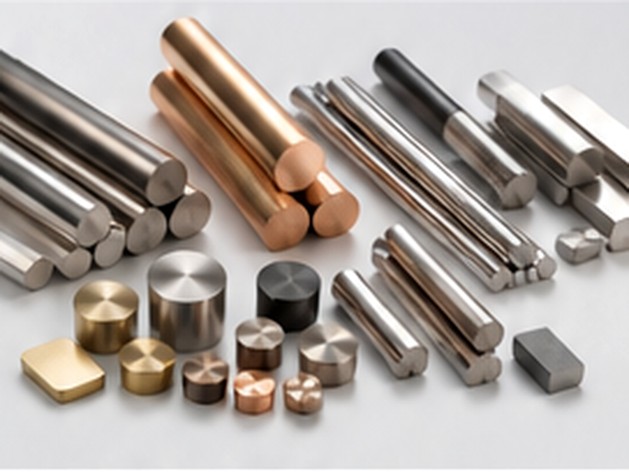 Figure 2. Rod, wire, pellet and slug geometries for flexible metal source loading.
Thermal evaporation uses resistive heating to raise the source material to a useful vapor pressure. It is widely applied to metals that can be evaporated without excessive reaction with the source container or decomposition. Boats, baskets, filaments and crucibles may be selected according to material behavior and equipment design.
Electron-beam evaporation concentrates energy on the charge inside a water-cooled hearth or liner. This approach can be advantageous for higher-melting materials and for processes that require high deposition rates or focused heating. Compatibility still depends on the metal, crucible or liner material, beam conditions, charge geometry and desired film quality.
No single form is universally suitable for both processes. A wire specified for resistive evaporation may be inconvenient for an electron-beam pocket, while large pieces can create unstable loading in a small thermal boat. Eata Energy can review the material and equipment information before a custom form is defined.
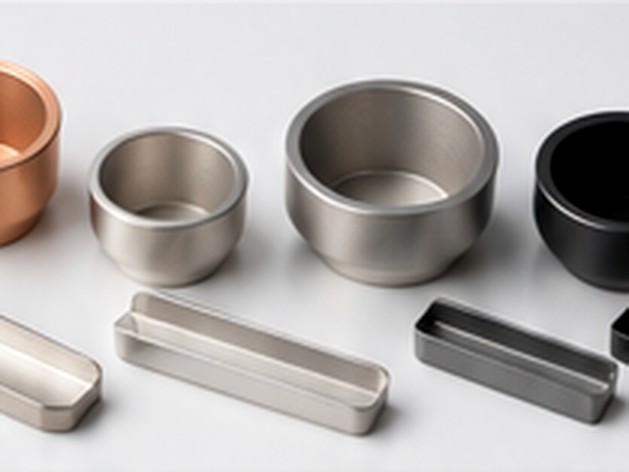 Figure 3. Source containers and boats illustrate the importance of material-to-equipment compatibility.
| Application Area | Representative Uses |
| Semiconductor and microelectronic devices | Contact metallization, interconnect layers, adhesion layers, barrier films and patterned device structures. |
| Photovoltaics and energy devices | Metal electrodes, back contacts, interface layers and experimental absorber or current-collection architectures. |
| Optical coatings | Reflective layers, absorbers, neutral-density structures, optical filters and multilayer coating stacks. |
| Displays and optoelectronics | Electrodes, mirrors, light-management layers and thin films used in LEDs, photodetectors and display structures. |
| Sensors and analytical devices | Catalytic metals, conductive tracks, sensing electrodes and functional surface coatings. |
| Magnetic and data-storage research | Nickel-, cobalt-, iron- and alloy-based films for magnetic, spintronic and multilayer investigations. |
| Protective and decorative coatings | Metallic finishes, corrosion-resistant layers and appearance-driven coatings on compatible substrates. |
| Materials science research | Composition screening, interface studies, thin-film property evaluation and prototype device development. |
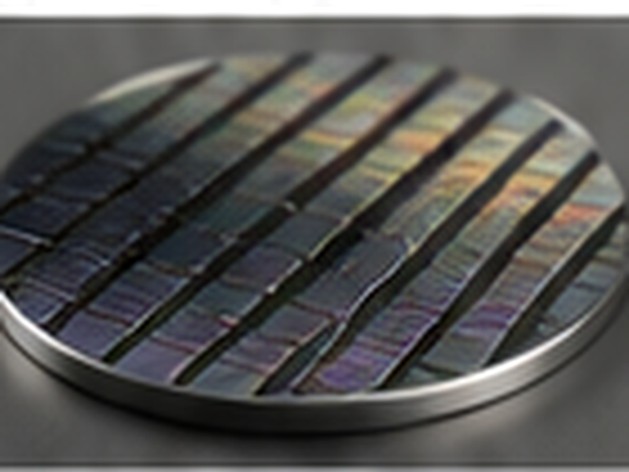 Figure 4. A coated wafer demonstrates the optical response of patterned thin-film layers.
High nominal purity is valuable, but the impurity profile should be matched to the film function. Alkali elements, transition metals, oxygen, carbon or other trace constituents can be important in electronic and optical applications even when total purity appears high. For alloy evaporation materials, composition tolerance and homogeneity may be as important as the overall assay.
Surface cleanliness also matters because oils, particulates and oxidation can affect outgassing, source wetting and film contamination. Packaging should therefore protect the product during storage and repeated handling. Depending on the material and agreed specification, supporting documentation may include identity, assay, elemental impurity data, alloy composition, dimensions and lot information.
Standard catalog dimensions do not cover every deposition chamber or film design. Eata Energy can evaluate customization requests for suitable metal and alloy systems, subject to technical feasibility and the information provided by the customer.
| Customization Area | Examples of Project Requirements |
| Composition | Pure metals, binary or multicomponent alloy ratios, doped compositions and application-specific metal combinations. |
| Purity and impurity limits | Alternative purity targets or controlled limits for elements that are critical to the device or coating. |
| Shape and dimensions | Pellet diameter, slug length, wire diameter, rod size, foil thickness, particle range or drawing-defined geometry. |
| Physical preparation | Cut pieces, compacted forms, cast forms, rolled or machined geometries where suitable for the material. |
| Packaging configuration | Unit weights, divided packs, barrier containers or other formats intended to simplify controlled handling. |
| Application matching | Material and form review against the evaporation source, deposition route, substrate and target film function. |
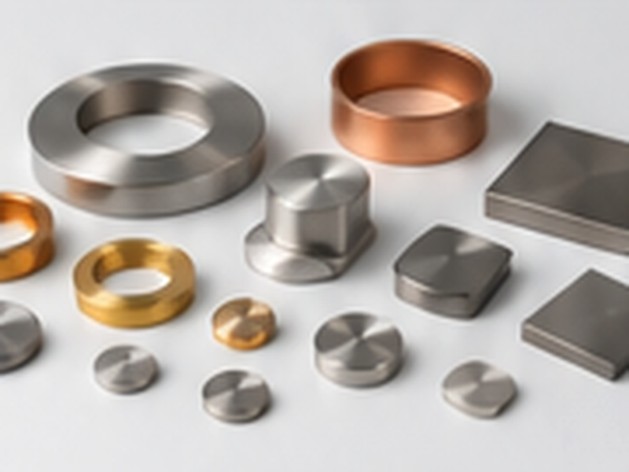 Figure 5. Custom rings, discs, pieces and slugs support non-standard source geometries.
| Catalog Number | Product Name | Order | Quantity |
|---|---|---|---|
| SEMMEM-0001 | 99.95% Palladium Foil, 0.001–0.2 mm (Pd) | Inquiry | |
| SEMMEM-0002 | Ultra-High-Purity Selenium Granules, ≥99.999%, 1–6 mm | Inquiry | |
| SEMMEM-0003 | Selenium Powder, ≥99.9%, 200 Mesh | Inquiry | |
| SEMMEM-0004 | High-Purity Selenium Powder, ≥99.99%, ≥200 Mesh | Inquiry | |
| SEMMEM-0005 | Ultra-High-Purity Selenium Powder, ≥99.999%, D50 80 Mesh | Inquiry | |
| SEMMEM-0006 | Ultra-High-Purity Selenium Lumps, ≥99.999% | Inquiry | |
| SEMMEM-0007 | Ultra-High-Purity Tellurium Chunks, ≥99.999%, 2–3 cm | Inquiry | |
| SEMMEM-0008 | High-Purity Tellurium Powder, ≥99.99%, 100 Mesh | Inquiry | |
| SEMMEM-0009 | Tellurium, ≥99.9% Metals Basis | Inquiry | |
| EMMEM-0011 | 99.99% High-Purity Ytterbium Evaporation Target | Inquiry |
For Research or Industrial Raw Materials, Not For Personal Medical Use!
|
There is no product in your cart. |

Eata Energy is your trusted partner for high-performance energy materials, customized R&D support, and a stable global supply chain. We support you every step of the way in energy innovation.
Enter your E-mail and receive the latest news from us.
Copyright © Eata Energy. All rights reserved.
