
Aluminum reigns as the most abundant metallic element in Earth's crust, and its remarkable combination of low density, high corrosion resistance, and excellent processability has made it indispensable across virtually every industrial sector. In its high-purity form — grades reaching 99.9995% (5N5) and beyond — aluminum transitions from a structural commodity to a precision material critical for semiconductor gate metallization, OLED reflective coatings, thin-film deposition, and advanced alloy research. The silvery-white luster and natural oxide passivation layer that forms within picoseconds of air exposure give high-purity aluminum its unique combination of reflectivity, chemical stability, and electrical performance.
At Eata Energy, we supply high-purity aluminum spanning grades from 4N (99.99%) to 5N5 (99.9995%) and above, available in foil, wire, rod, powder, pellets, sputtering targets, and custom-configured geometries. Each batch ships with comprehensive analytical documentation including ICP-MS and GDMS characterization, ensuring your thin-film processes, alloy melts, or device fabrication workflows achieve the reproducibility that high-stakes research demands.
Aluminum's position in Group 13 of the periodic table — atomic number 13 — gives it three valence electrons that readily participate in metallic bonding, yielding a face-centered cubic crystal structure with exceptional ductility. Unlike most metals, aluminum becomes stronger at cryogenic temperatures rather than brittle, a property exploited in LNG storage tanks and spacecraft cryogenic systems.
| Property | Value | Notes |
| Atomic Number | 13 | Group 13, Period 3 |
| Atomic Weight | 26.98 g/mol | |
| Density | 2.70 g/cm³ | One-third that of steel |
| Melting Point | 660°C | |
| Boiling Point | 2519°C | |
| Crystal Structure | FCC | Face-centered cubic |
| Thermal Conductivity | 237 W/m·K | |
| Electrical Conductivity | 64% IACS | Of copper standard |
| CAS Number | 7429-90-5 | EINECS: 231-072-3 |
| Reflectivity | ~90% | Visible spectrum |
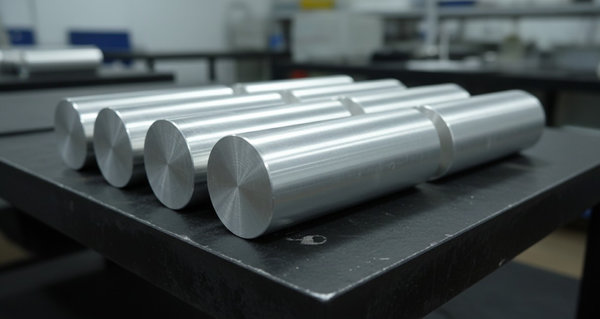 Figure 1: High-purity cylindrical aluminum ingots with characteristic silvery-white machined surfaces
A single stable isotope, ²Al, dominates natural aluminum almost exclusively. This absence of isotopic variation simplifies spectroscopic analysis and ensures consistent nuclear properties across all batches — a subtle but meaningful advantage for researchers working with neutron scattering or nuclear magnetic resonance applications.
Our aluminum product range addresses the full spectrum of thin-film deposition, alloy development, and materials research requirements, each form optimized for specific processing methodologies.
Ultra-thin aluminum foil represents our most versatile format, serving applications from battery current collector substrates and capacitor electrodes to experimental platforms for 2D material transfer. The self-passivating oxide layer that forms on exposed surfaces provides natural corrosion protection while maintaining excellent electrical contact when appropriately treated.
Hot-isostatically pressed (HIP) aluminum sputtering targets achieve full theoretical density with fine, uniform grain structure essential for stable DC magnetron sputtering. These targets deposit aluminum thin films for semiconductor gate electrodes, interconnect barrier layers, and reflective coatings across display and optical industries.
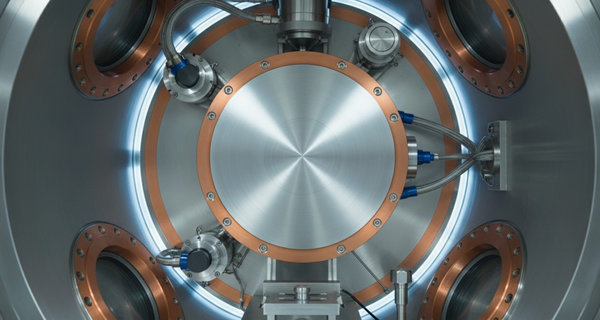 Figure 2: High-purity aluminum sputtering target mounted in a vacuum deposition chamber
Solid aluminum forms provide feedstock for thermal evaporation, e-beam evaporation, and vacuum induction melting operations. Wire configurations support specific evaporation source geometries, while pellets and granules suit crucible-based deposition systems.
High-purity aluminum powders enable powder metallurgy compaction, additive manufacturing feedstock, and energetic materials research. Spherical gas-atomized powders offer excellent flowability and packing density for SLM and binder jetting processes.
High-purity aluminum dominated semiconductor metallization for decades before copper damascene processes emerged at sub-130 nm nodes. Even today, aluminum and its alloys — particularly Al-Si (1%) and Al-Cu (0.5%) — remain essential for power devices, MEMS, discrete components, and research-grade test structures where process simplicity and cost-effectiveness outweigh the conductivity advantage of copper. Our 5N aluminum targets and evaporation pellets deliver the controlled impurity profiles necessary for reliable Schottky barriers, ohmic contacts, and gate electrodes across compound semiconductor platforms including GaN, SiC, and GaAs.
 Figure 3: Ultra-thin high-purity aluminum foil being unwound from a large industrial roll
Aluminum thin films deposited by sputtering or thermal evaporation serve as the reflective back-electrode in top-emitting OLED displays and as mirror coatings in optical systems from UV through near-infrared wavelengths. The naturally forming Al₂O₃ surface layer, approximately 2–4 nm thick, provides both corrosion resistance and a chemically stable interface for subsequent dielectric or organic layer deposition. High-purity aluminum ensures consistent reflectivity exceeding 90% across the visible spectrum with minimal scattering losses.
Aluminum's density of merely 2.7 g/cm³ — one-third that of steel — underpins its dominance in aerospace structural applications. High-purity aluminum and specialized alloys (Al-Li, Al-Sc) enable honeycomb core sandwich panels, satellite structural frames, and cryogenic tankage where every gram carries a payload penalty. Our research-grade aluminum supports alloy development programs investigating precipitation-strengthened systems and grain boundary engineering for next-generation lightweight structures.
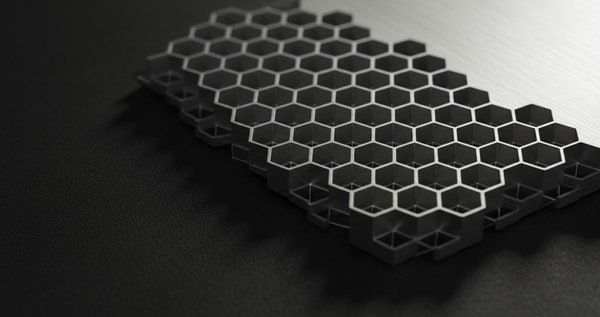 Figure 4: Precision-manufactured aluminum honeycomb core showing hexagonal cell geometry
The addition of scandium to aluminum — typically 0.1% to 0.5% by weight — produces alloys with remarkable gains in strength, weldability, and corrosion resistance compared with conventional 5xxx and 6xxx series alloys. Al-Sc alloys are actively researched for aerospace structural components, marine applications, and additive manufacturing feedstock where grain refinement via Al₃Sc precipitates offers unique property combinations. We supply both pure aluminum and pre-alloyed Al-Sc master alloys for research programs exploring this emerging material system.
High-purity aluminum serves as a sacrificial anode material in cathodic protection systems and as the basis for chromate-free conversion coating research. Anodization studies on pure aluminum substrates establish baseline electrochemical behavior for developing next-generation surface treatments that eliminate hexavalent chromium while maintaining corrosion performance comparable to Alodine and chromate conversion processes.
Selecting the optimal aluminum purity grade requires balancing analytical requirements against processing economics. The matrix below provides practical guidance for common research and industrial applications.
| Grade | Characteristics | Recommended For |
| Al 99.9% | Standard purity; Si, Fe < 500 ppm | General alloy melting, chemical synthesis, thermal spray |
| Al 99.99% | 4N; Si, Fe < 100 ppm, Cu < 50 ppm | Sputtering targets, evaporation material, battery research |
| Al 99.999% | 5N; full trace control < 10 ppm | Semiconductor gate metallization, OLED coatings, optical films |
| Al 99.9995% | 5N5; dedicated batch GDMS verified | Advanced semiconductor nodes, quantum device substrates |
Eata Energy certifies every aluminum batch through a rigorous multi-technique analytical protocol designed to verify both bulk composition and surface condition.
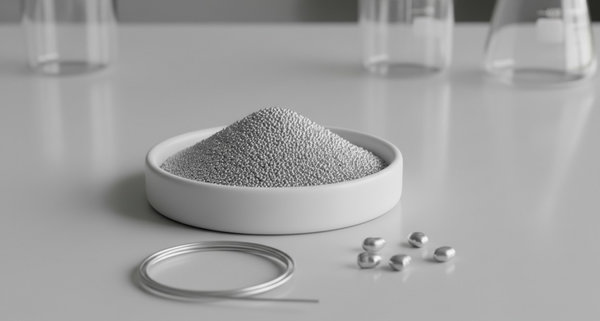 Figure 5: Spherical high-purity aluminum powder in a ceramic dish with wire and pellets beside it
Frontier research and advanced process development frequently demand aluminum configurations that extend beyond standard catalog offerings. Eata Energy maintains the technical partnerships and processing capabilities to deliver bespoke aluminum products that address these specialized requirements.
Engage our materials engineers early in your project scoping to optimize aluminum grade, form, and surface preparation for your specific deposition process, alloy target, or device architecture.
| Catalog Number | Product Name | Order | Quantity |
|---|---|---|---|
| HPAHPA-0001 | High-Purity Aluminum Sputtering Target, 99.99–99.999% (Al) | Inquiry | |
| HPM-HPA-0001 | High-Purity Aluminum Spool Wire | Inquiry | |
| HPM-HPA-0002 | High-Purity Aluminum Tube | Inquiry | |
| HPM-HPA-0003 | Ultra-High-Purity Aluminum Thin-Film Disk | Inquiry | |
| HPM-HPA-0004 | Ultra-High-Purity Aluminum Sputtering Target | Inquiry | |
| HPM-HPA-0005 | High-Purity Aluminum Rod Stock | Inquiry | |
| HPM-HPA-0006 | Ultra-High-Purity Aluminum Top-Hat Single Crystal | Inquiry | |
| HPM-HPA-0007 | High-Purity Irregular Aluminum Powder, 60 μm | Inquiry | |
| HPM-HPA-0008 | Aluminum Pellets for Controlled Melting | Inquiry | |
| HPM-HPA-0009 | Light-Tight High-Purity Aluminum Foil, 0.5 mm | Inquiry |
For Research or Industrial Raw Materials, Not For Personal Medical Use!
|
There is no product in your cart. |

Eata Energy is your trusted partner for high-performance energy materials, customized R&D support, and a stable global supply chain. We support you every step of the way in energy innovation.
Enter your E-mail and receive the latest news from us.
Copyright © Eata Energy. All rights reserved.
