
Ceramic accessories are often small in size but critical to process stability. In high-temperature furnaces, analytical equipment, electrical assemblies, powder-processing lines, and energy-material workflows, the right ceramic component helps maintain dimensional control, electrical separation, chemical compatibility, and repeatable operating conditions. Eata Energy supplies a broad selection of technical ceramic accessories for laboratory and industrial use, with material and geometry options suited to demanding environments.
Our portfolio covers common ceramic forms such as crucibles, boats, trays, tubes, rods, plates, discs, insulators, bushings, sleeves, support components, and kiln furniture. Product selection can be matched to operating temperature, atmosphere, mechanical load, thermal cycling, electrical requirements, and contact chemistry. This application-focused approach helps customers identify a practical ceramic solution rather than choosing only by shape or material name.
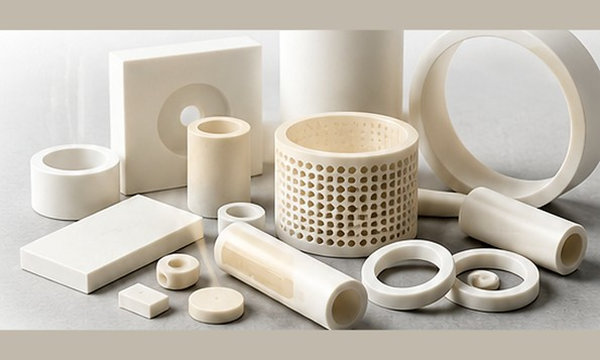 Representative ceramic accessories for thermal, electrical, structural, and wear-resistant functions.
Technical ceramics are selected because they can combine properties that are difficult to obtain from conventional metals or polymers. Depending on the material grade, ceramic accessories may provide high-temperature stability, electrical insulation, corrosion resistance, wear resistance, controlled thermal conductivity, low thermal expansion, or high mechanical stiffness. The most suitable choice depends on the complete service environment, including the heating profile, gas atmosphere, contacting materials, load direction, allowable contamination, and dimensional tolerance.
Eata Energy can support both standard accessory forms and application-specific components. For quote preparation, customers may provide a drawing, dimensions, a reference sample, or a description of the operating conditions. When the final material is not yet fixed, key requirements can be reviewed to narrow the available ceramic options.
| Category | Common Product Forms | Typical Uses |
| Ceramic crucibles and labware | Alumina crucibles, zirconia crucibles, combustion boats, trays, dishes, lids, and sample holders | Calcination, heating, ash testing, powder processing, melting support, and laboratory preparation |
| Ceramic tubes and protection components | Open-end tubes, closed-one-end tubes, single-bore and multi-bore tubes, process tubes, thermocouple protection tubes | Temperature measurement, furnace protection, wire insulation, gas handling, and sensor assemblies |
| Ceramic rods, pins, and supports | Solid rods, alignment pins, support posts, locating elements, spacers, and structural inserts | Positioning, support, separation, electrical isolation, and high-temperature fixtures |
| Ceramic plates, discs, and substrates | Flat plates, setter plates, discs, rings, washers, substrates, and machined panels | Thermal support, electrical insulation, component mounting, furnace loading, and test fixtures |
| Ceramic insulators and bushings | Bushings, sleeves, beads, spools, stand-offs, feedthrough insulators, and multi-hole insulators | Electrical isolation, wire guidance, mechanical separation, and sensor construction |
| Kiln and furnace accessories | Setter plates, beams, posts, saggers, trays, supports, and firing fixtures | Sintering, debinding, heat treatment, ceramic firing, battery-material processing, and fuel-cell component production |
| Wear and flow-control parts | Nozzles, guide rings, liners, rollers, seals, valve elements, and abrasion-resistant inserts | Powder transfer, fluid guidance, wire handling, erosion control, and equipment protection |
| Custom ceramic shapes | Grooved, slotted, threaded, stepped, tapered, perforated, or drawing-based components | Prototype development, equipment replacement, new system design, and process-specific integration |
Ceramic crucibles and laboratory accessories are used to contain powders, pellets, salts, oxides, and other materials during heating or analysis. Available forms may include high-form and cylindrical crucibles, conical vessels, combustion boats, rectangular trays, circular dishes, discs, lids, and sample supports. Alumina is widely used for general high-temperature and chemically resistant labware, while zirconia may be considered when higher toughness or specific chemical compatibility is required. Geometry, wall thickness, purity, and heating schedule should be reviewed together for reliable performance.
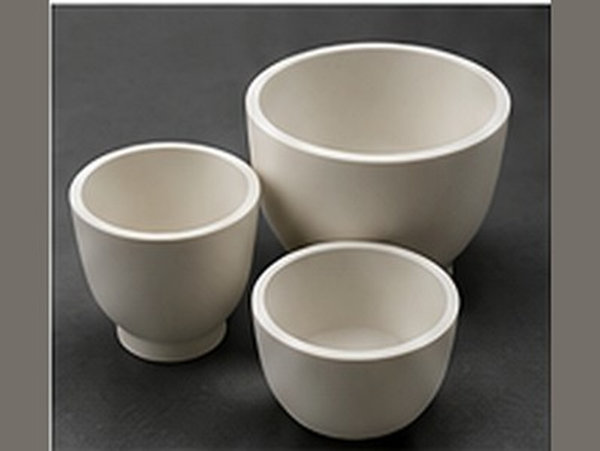 Ceramic crucibles and vessels for heating, calcination, and sample preparation.
Ceramic tubes and rods are available in single-bore, double-bore, multi-bore, oval, open-end, and closed-one-end configurations. Common functions include protecting thermocouples, insulating lead wires, forming furnace process tubes, supporting components, guiding gas flow, and separating electrical conductors. Alumina, mullite, zirconia, and silicon carbide are among the materials used for tube and rod products. The correct selection depends on thermal shock, atmosphere, mechanical support, required dielectric behavior, and whether the component is exposed to molten materials or reactive gases.
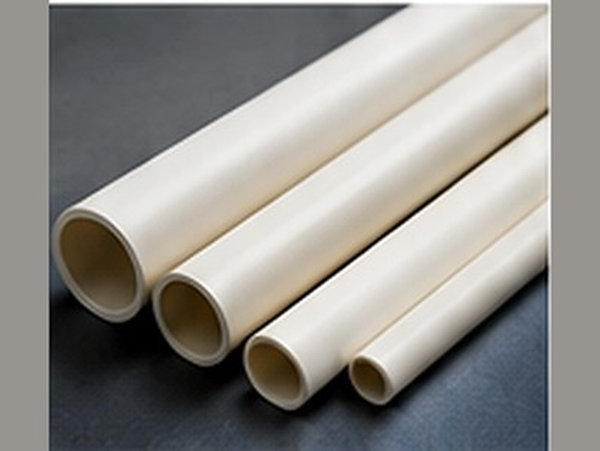 Ceramic tubes and rods in configurations suited to protection, insulation, and support.
Flat ceramic components serve as platforms, separators, setter surfaces, electrical barriers, mounting interfaces, and wear-resistant inserts. Products can be supplied as plates, discs, rings, washers, substrates, or machined panels with holes, slots, grooves, and edge features. Alumina provides a versatile balance of insulation, strength, and heat resistance. Aluminum nitride is considered where electrical insulation and elevated thermal conductivity are both important, while silicon carbide is valuable in furnace fixtures and thermally demanding structural applications.
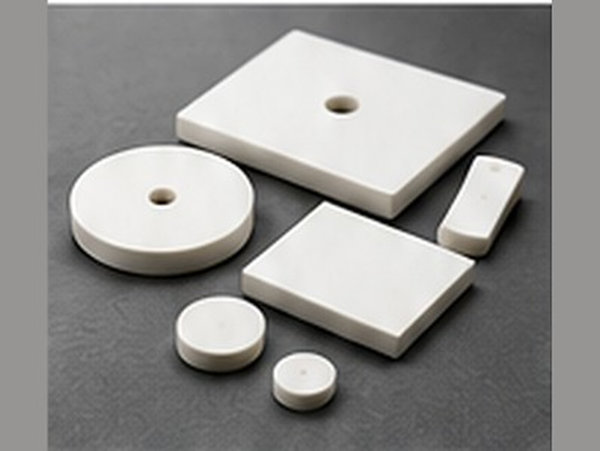 Machined ceramic plates, discs, and rings for supporting, mounting, and insulating assemblies.
Electrical and mechanical isolation components include ceramic bushings, sleeves, beads, spools, washers, stand-offs, capillaries, and multi-hole insulators. These parts are used in heaters, sensors, furnaces, analytical instruments, power equipment, and test assemblies. Important specifications may include bore size, concentricity, dielectric performance, surface finish, dimensional tolerance, and compatibility with metal housings or sealing systems. Stepped and flanged profiles can help locate the part while maintaining a defined electrical gap.
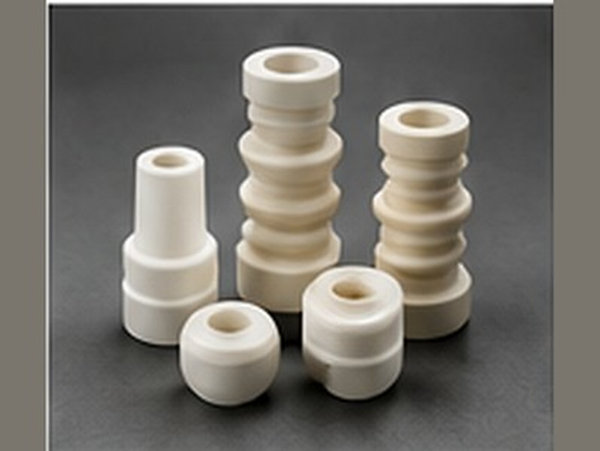 Ceramic insulators and bushings with stepped profiles for positioning and electrical separation.
Ceramic nozzles, guide rings, liners, rollers, valve elements, and custom wear parts are used where abrasion, erosion, corrosion, or high operating temperature limits the service life of conventional materials. Zirconia can provide high toughness and wear resistance, silicon nitride combines strength with thermal-shock resistance, and silicon carbide offers high-temperature capability with strong thermal transport. Final geometry can be tailored to the flow path, mounting method, contact pressure, and expected wear pattern.
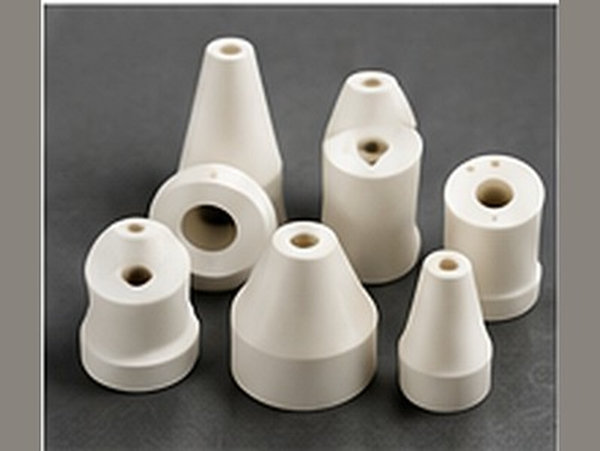 Ceramic nozzles and shaped components for flow guidance, wear protection, and equipment integration.
| Material | Why It Is Selected | Common Accessory Forms |
| Alumina (Al2O3) | Electrical insulation, heat resistance, hardness, and broad chemical stability | Crucibles, tubes, rods, plates, substrates, bushings, insulators, and wear parts |
| Zirconia (ZrO2) | High strength, fracture toughness, wear resistance, and relatively low thermal conductivity | Wear components, guides, sleeves, precision parts, crucibles, and thermal-insulating components |
| Mullite | High-temperature stability, electrical insulation, and useful thermal-shock behavior | Furnace tubes, protection tubes, rods, kiln supports, and laboratory accessories |
| Silicon carbide (SiC) | High-temperature strength, thermal conductivity, corrosion resistance, and thermal-shock capability | Kiln furniture, setter plates, beams, process components, liners, and furnace fixtures |
| Silicon nitride (Si3N4) | High strength, wear resistance, low thermal expansion, and strong thermal-shock resistance | Nozzles, guides, rollers, molten-metal components, and mechanically loaded hot-zone parts |
| Aluminum nitride (AlN) | High thermal conductivity combined with electrical insulation | Heat-spreading substrates, electrically insulating plates, electronic fixtures, and thermal-management components |
| Cordierite | Very low thermal expansion and dimensional stability during temperature change | Heat-resistant supports, fixtures, setter components, and applications involving repeated thermal cycling |
Material note: Property values and allowable service conditions vary by ceramic grade, purity, porosity, geometry, atmosphere, and manufacturing method. Final selection should be confirmed against the specific operating conditions and product specification.
Ceramic accessories support processes where heat, chemical exposure, electrical isolation, or dimensional stability is central to the result. Typical application areas include:
A complete request for quotation allows the material and geometry to be evaluated together. The following information is especially useful:
Consistent ceramic performance begins with clear specifications. Depending on the product and project, Eata Energy can coordinate dimensional inspection, material identification, purity information, surface-finish requirements, drawing review, and packaging instructions. For custom parts, critical dimensions and functional surfaces can be highlighted during the quotation stage so that manufacturing and inspection focus on the features that matter most in the final assembly.
Because ceramic behavior is influenced by shape and processing history, it is important to avoid treating all grades of the same chemical composition as identical. Density, grain structure, porosity, machining method, and firing route can affect thermal, mechanical, and electrical performance. Our team can help organize the available information and align the accessory specification with the intended use.
When a standard ceramic accessory does not match the equipment or process, Eata Energy can support custom development. Components may be produced from customer drawings, CAD data, reference samples, or dimensional sketches. Customization can cover material grade, purity, outside and inside diameters, length, thickness, bore count, hole pattern, slots, grooves, flanges, steps, tapers, chamfers, surface finish, and other functional details.
Prototype quantities and repeat industrial requirements can be discussed according to the complexity of the part and the selected manufacturing route. Early review of the application helps identify practical tolerances, avoid fragile features, and balance performance with manufacturability. Contact Eata Energy with your specifications to receive a tailored ceramic accessory recommendation and quotation.
Need a ceramic part matched to your drawing or process?
Send the material preference, dimensions, operating conditions, and target quantity to Eata Energy for product selection or custom manufacturing support.
| Catalog Number | Product Name | Order | Quantity |
|---|---|---|---|
| OCCA-0001 | 99% BN-TiB2 Thermally Conductive Ceramic Crucible | Inquiry | |
| OCCA-0002 | Aluminum Oxide (Al2O3) Evaporation Crucible, 99.50% Purity | Inquiry | |
| OCCA-0003 | Boron Nitride (BN) Evaporation Crucible, 99.50% Purity | Inquiry | |
| OCCA-0004 | Silicon Dioxide (SiO2) Evaporation Crucible, 99.99% Purity | Inquiry |
For Research or Industrial Raw Materials, Not For Personal Medical Use!
|
There is no product in your cart. |

Eata Energy is your trusted partner for high-performance energy materials, customized R&D support, and a stable global supply chain. We support you every step of the way in energy innovation.
Enter your E-mail and receive the latest news from us.
Copyright © Eata Energy. All rights reserved.
