
Perovskite oxides are a broad family of inorganic materials commonly described by an ABO₃-type framework. By changing the A-site or B-site cations, introducing controlled dopants, or adjusting oxygen non-stoichiometry, researchers can tune electrical conductivity, ion transport, magnetic response, dielectric behavior, catalytic activity, and thermal compatibility within one highly adaptable crystal platform.
Eata Energy supplies and develops perovskite oxide raw materials for powder processing, ceramic fabrication, coating and deposition studies, electrochemical testing, and functional-device research. Available specifications can be matched to the intended process, including composition, dopant level, purity, particle-size range, morphology, calcination state, target geometry, or substrate orientation, subject to technical review.
The value of a perovskite oxide lies in its structural flexibility. The lattice can accommodate many combinations of alkaline-earth, rare-earth, transition-metal, and other cations. This allows the same structural family to produce insulating, semiconducting, metallic, ferroelectric, piezoelectric, magnetic, catalytic, oxide-ion-conducting, proton-conducting, or mixed ionic-electronic conducting materials.
This tunability is especially useful when a project must balance several requirements at once: electrochemical activity, thermal expansion, sintering response, chemical compatibility, defect concentration, interfacial stability, and manufacturability. Rather than treating composition as a fixed formula, perovskite oxide development often uses controlled substitution and defect engineering to create an application-specific material system.
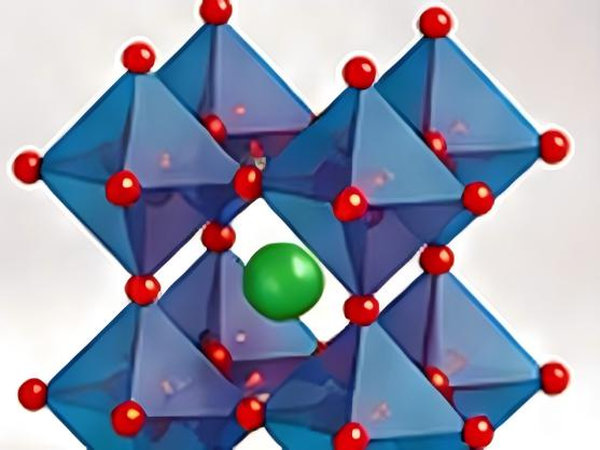 Fig. 1. Conceptual representation of the linked octahedral framework characteristic of many ABO₃ perovskite oxides.
Perovskite oxide materials may be supplied or developed in forms suited to different fabrication routes. Final availability depends on composition, dimensional requirements, and technical feasibility.
| Material Form | Typical Uses |
| Fine and submicron powders | Solid-state synthesis, ceramic processing, screen printing, slurry preparation, catalyst evaluation, and electrode fabrication. |
| Nanopowders or high-surface-area grades | Surface-sensitive catalysis, low-temperature reactivity studies, composite electrodes, and advanced sintering research. |
| Calcined powders and granules | Pressing, tape casting, extrusion, spray processing, and preparation of dense or porous ceramic parts. |
| Ceramic pellets, discs, and plates | Electrical testing, dielectric measurement, ionic-conductivity studies, sensor development, and laboratory device assembly. |
| Sputtering and PLD targets | Thin-film deposition of functional oxides, electrode layers, dielectric films, and oxide heterostructures. |
| Single-crystal substrates | Epitaxial growth, interface studies, lattice-matched oxide films, and electronic or magnetic thin-film research. |
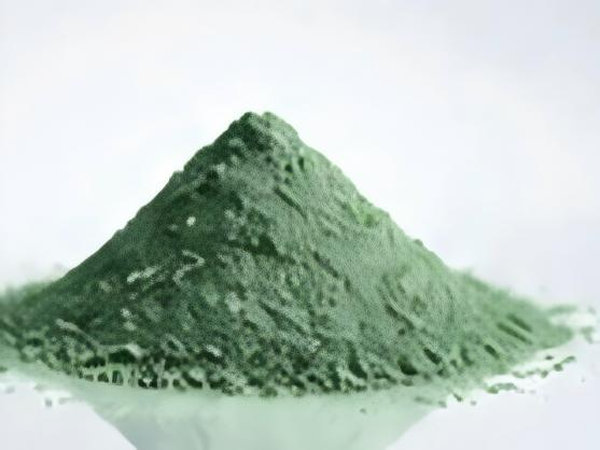 Fig. 2. Fine perovskite oxide powder for ceramic, electrode, catalyst, and coating development.
The following product families are frequently used across energy, electronic, catalytic, and advanced ceramic programs. Composition ranges and dopant levels can be discussed according to the customer's target performance and processing route.
| Material Family | Formula / Abbreviation | Common Research and Industrial Directions |
| Strontium Titanate | SrTiO₃ (STO) | Dielectric and semiconductor research, oxide thin-film substrates, doped conductive substrates, sensors, and electrochemical studies. |
| Barium Titanate | BaTiO₃ (BTO) | High-permittivity ceramics, capacitors, ferroelectric and piezoelectric research, electro-optic devices, and composite dielectrics. |
| Barium Strontium Titanate | Ba₁₋ₓSrₓTiO₃ (BST) | Tunable dielectric systems, microwave components, thin films, and composition-dependent ferroelectric studies. |
| Lanthanum Aluminate | LaAlO₃ (LAO) | Single-crystal substrates, epitaxial oxide films, dielectric layers, and LAO/STO interface research. |
| Lanthanum Strontium Manganite | La₁₋ₓSrₓMnO₃ (LSM/LSMO) | Solid oxide cell oxygen electrodes, conductive ceramics, magnetic thin films, and correlated-electron research. |
| Lanthanum Strontium Cobalt Ferrite | La₁₋ₓSrₓCo₁₋ᵧFeᵧO₃₋δ (LSCF) | Mixed ionic-electronic conducting oxygen electrodes, oxygen transport, electrocatalysis, and membrane studies. |
| Lanthanum Ferrite | LaFeO₃ | Gas sensing, oxidation catalysis, photocatalysis, electrode research, and defect-chemistry studies. |
| Lanthanum Cobaltite | LaCoO₃ | Electrocatalysis, oxygen exchange, magnetic and transport studies, and sensor materials. |
| Bismuth Ferrite | BiFeO₃ (BFO) | Multiferroic, ferroelectric, magnetic, photocatalytic, and thin-film device research. |
| Lead Zirconate Titanate | Pb(Zr,Ti)O₃ (PZT) | Piezoelectric actuators, transducers, ferroelectric ceramics, sensors, and thin-film research. |
| Potassium Sodium Niobate | (K,Na)NbO₃ (KNN) | Lead-free piezoelectric and ferroelectric ceramic development. |
| Barium Zirconate and Doped Barium Zirconate | BaZrO₃; BaZr₁₋ₓYₓO₃₋δ (BZY) | Proton-conducting electrolytes, solid oxide electrochemical devices, refractory ceramics, and transport studies. |
| Lanthanum Gallate-Based Oxides | LaGaO₃; La₁₋ₓSrₓGa₁₋ᵧMgᵧO₃₋δ (LSGM) | Oxide-ion conducting electrolytes and intermediate-temperature solid oxide cell research. |
| Rare-Earth Nickelates | RNiO₃ (R = La, Nd, Sm, etc.) | Metal-insulator transition studies, sensors, electronic switching, and correlated oxide thin films. |
| High-Entropy Perovskite Oxides | Multi-cation ABO₃-type systems | Exploratory catalysis, electrochemical electrodes, thermal stability research, and compositionally complex oxide design. |
Two powders with the same nominal formula may behave very differently during calcination, sintering, dispersion, coating, or electrochemical operation. For this reason, selection should consider more than chemical formula alone.
A-site and B-site ratios can change phase stability, carrier concentration, oxygen-vacancy content, conductivity, catalytic activity, and thermal expansion.
X-ray diffraction is commonly used to confirm the intended perovskite phase and identify secondary phases that may affect device behavior.
Particle size influences slurry stability, packing density, surface area, sintering temperature, grain growth, and electrode microstructure.
Catalytic and electrochemical applications often depend on accessible surface area, pore development, and particle shape.
Oxygen vacancies and mixed oxidation states may control ionic transport, electronic conductivity, and surface exchange kinetics.
Thermal treatment affects crystallinity, phase formation, hard agglomerates, reactivity, and subsequent densification.
Electrodes, electrolytes, current collectors, substrates, and binders should be assessed for thermal and chemical compatibility.
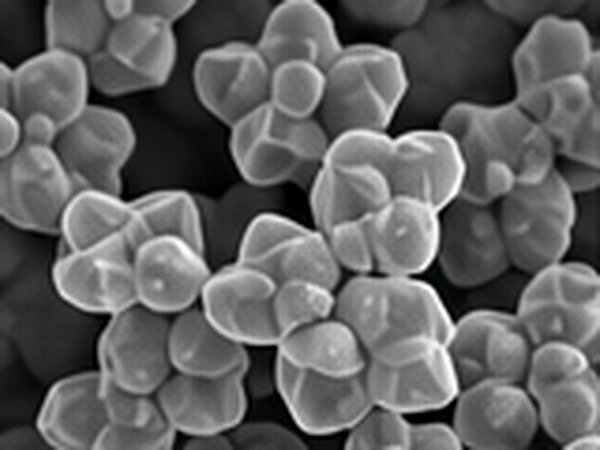 Fig. 3. Particle morphology and agglomeration can strongly affect dispersion, packing, reaction kinetics, and sintering behavior.
Perovskite manganites, cobaltites, ferrites, nickelates, titanates, and gallates are widely studied as oxygen electrodes, fuel electrodes, electrolytes, interlayers, and functional coatings. Mixed ionic-electronic conduction can extend electrochemical reaction zones beyond a narrow interface, while composition control helps tune catalytic activity and compatibility.
Transition-metal perovskite oxides are investigated for oxygen evolution and oxygen reduction because their electronic structure, metal-oxygen bonding, surface reconstruction, and defect chemistry can be adjusted through composition and strain.
Barium titanate, barium strontium titanate, and related formulations are central to high-permittivity ceramic research. Grain size, dopant chemistry, density, and phase transitions all influence dielectric constant, loss, temperature stability, and breakdown behavior.
BTO, PZT, KNN, BFO, and related compositions support research into polarization switching, actuation, sensing, energy harvesting, nonvolatile devices, and magnetoelectric coupling.
Perovskite ferrites, cobaltites, titanates, and mixed conductors can respond to oxygen activity, reducing or oxidizing gases, and temperature. Oxygen-vacancy transport also supports membrane and separation research.
Single-crystal substrates and dense deposition targets are used for pulsed laser deposition, sputtering, molecular beam epitaxy, and related techniques. Lattice matching, orientation, surface finish, and target density are important for reproducible film growth.
LaFeO₃, LaCoO₃, substituted manganites, cobaltites, ferrites, and high-entropy perovskites are explored for oxidation reactions, pollutant conversion, photocatalysis, thermochemical cycling, and catalytic supports.
 Fig. 4. Defect chemistry and cation substitution provide multiple pathways for tailoring charge and ion transport.
Perovskite oxide materials are not the same as the metal-halide perovskites commonly discussed in photovoltaic absorber research. Oxide perovskites contain oxygen in a ceramic lattice and include materials such as SrTiO₃, BaTiO₃, LaFeO₃, LSM, and LSCF. They are typically selected for thermal stability, dielectric behavior, ionic or electronic transport, catalysis, magnetism, and ceramic processing. The distinction is important when specifying composition, handling requirements, processing temperature, and intended device architecture.
A successful material program connects powder properties to the final microstructure. Typical development work may include powder conditioning, milling or dispersion, binder addition, forming, binder removal, calcination, sintering, machining, electrode application, or thin-film deposition. Each step can influence grain size, porosity, density, phase composition, surface chemistry, and electrical performance.
 Fig. 5. Dense ceramic pellets and discs are practical formats for dielectric, conductivity, electrochemical, and sensor testing.
Application-Oriented Material Selection: We help translate device and process requirements into practical material specifications instead of treating every composition as a generic powder.
Broad Composition Coverage: Projects may involve titanates, zirconates, manganites, ferrites, cobaltites, nickelates, gallates, niobates, multiferroics, mixed conductors, and compositionally complex perovskites.
Multiple Material Forms: Powders, nanopowders, calcined grades, granules, ceramic pieces, deposition targets, and selected crystal substrates can be evaluated according to the project.
Specification Flexibility: Purity, stoichiometry, dopant concentration, particle size, surface area, calcination state, geometry, and testing requirements can be discussed before production.
Technical Documentation: Depending on the material and order, documentation and analytical options may include composition data, phase analysis, particle-size information, surface-area data, density, microscopy, or other agreed parameters.
Scale-Up Support: Development quantities and larger industrial requirements can be evaluated with attention to repeatability and process compatibility.
 Fig. 6. Composition, defects, interfaces, and thermal processing work together to create the final functional microstructure.
Many perovskite oxide projects require a composition that is not available as a standard catalog item. Eata Energy can evaluate custom material requests for research programs, process development, prototype manufacturing, and industrial raw-material supply.
To request a quotation, provide the target formula, dopant level, intended application, preferred material form, purity requirement, particle-size range or dimensions, testing needs, and estimated quantity. These details allow the technical team to assess feasibility and recommend a specification aligned with your process.
Discuss Your Perovskite Oxide Requirements with Eata Energy
Send your composition, specification, application, form, and quantity requirements for a technical evaluation and quotation.
| Catalog Number | Product Name | Order | Quantity |
|---|---|---|---|
| OCPOX-0001 | Strontium Titanate Powder, ≥99.5%, ≤5 μm | Inquiry | |
| OCPOX-0002 | BaO-Doped Barium Titanate High-Dielectric Ceramic Target | Inquiry | |
| OCPOX-0003 | 99.9% LCMO Magnetoresistive Perovskite Sputtering Target | Inquiry | |
| OCPOX-0004 | 99.9% Strontium Cobaltite Mixed-Conducting Perovskite Target | Inquiry | |
| OCPOX-0005 | 99.9% BSCF Low-Loss Microwave Perovskite Sputtering Target | Inquiry | |
| OCPOX-0006 | 99.9% LSMO Magnetoresistive Perovskite Sputtering Target | Inquiry | |
| OCPOX-0007 | 99.9% SmNiO3 Correlated Perovskite Sputtering Target | Inquiry | |
| OCPOX-0008 | 99.5% LaBiFeO3 Lanthanum-Doped Bismuth Ferrite Multiferroic Sputtering Target | Inquiry | |
| OCPOX-0009 | 99.9% YBCO-BYNO-BYTO Nanocomposite Superconducting Sputtering Target | Inquiry | |
| OCPOX-0010 | 99.9% Ba2YTaO6 BYTO Double-Perovskite Sputtering Target | Inquiry |
For Research or Industrial Raw Materials, Not For Personal Medical Use!
|
There is no product in your cart. |

Eata Energy is your trusted partner for high-performance energy materials, customized R&D support, and a stable global supply chain. We support you every step of the way in energy innovation.
Enter your E-mail and receive the latest news from us.
Copyright © Eata Energy. All rights reserved.
