
Light-responsive materials determine how efficiently a formulation captures photons, transfers energy, initiates charge separation, or activates a chemical transformation. Eata Energy supplies photosensitizers and performance additives selected for advanced energy research, optoelectronic development, photochemical processing, and functional coating applications. Our portfolio spans established molecular dye families, metal-complex sensitizers, organic chromophores, photopolymerization components, interface modifiers, and formulation aids.
A photosensitizer absorbs light at a useful wavelength and channels the resulting excited-state energy or electron transfer into another component of the system. In a dye-sensitized solar cell, the sensitizer harvests photons at a semiconductor interface. In a photoredox or photoelectrochemical process, it enables charge transfer that drives a catalytic cycle. In a visible-light-curable resin, the sensitizer can extend the spectral response of an initiator package so that polymerization begins under a practical lamp or LED source. Additives then refine the surrounding environment by influencing interfacial contact, crystal growth, dispersion, recombination, stability, or reaction kinetics.
This functional diversity is why apparently similar dyes may behave very differently in a real device. Absorption intensity alone is not enough: excited-state lifetime, triplet yield, electron-injection ability, regeneration kinetics, aggregation tendency, and compatibility with the host matrix all contribute to performance. Eata Energy helps customers compare these factors at the material-selection stage so that screening starts with a more relevant group of candidates.
 Figure 1. Light absorption and excited-state transfer in a molecular sensitizer system.
Our sourcing and customization scope can cover the following material families. Availability, grade, analytical package, and form are confirmed for each inquiry, allowing the supplied material to match the intended experiment or manufacturing study.
| Material Group | Representative Keywords | Primary Function | Common Applications |
| Ruthenium and other metal-complex sensitizers | Ruthenium polypyridyl dyes; N3-, N719-, N749-, Z907-, K19-, and C106-type sensitizers; related iridium, copper, iron, and cobalt complexes | Broad light harvesting, charge injection, excited-state redox activity | Dye-sensitized solar cells, photoelectrochemistry, photoredox research, optical sensing |
| Metal-free organic sensitizers | Donor-pi-acceptor dyes; triphenylamine, carbazole, indoline, coumarin, cyanine, squaraine, perylene, xanthene, and BODIPY derivatives | Tunable absorption, structural flexibility, metal-free molecular design | Indoor photovoltaics, organic optoelectronics, photocatalysis, luminescent and sensing systems |
| Porphyrins and phthalocyanines | Free-base and metalated macrocycles; soluble and functionalized derivatives; near-infrared absorbing structures | Strong visible or near-infrared absorption, long-lived excited states, surface-binding options | Solar-energy conversion, photocatalysis, photon management, photoelectrochemical interfaces |
| Photopolymerization sensitizers | Benzophenone, thioxanthone, xanthone, anthraquinone, camphorquinone, ketocoumarin, and related chromophores | Extends spectral response and transfers energy or electrons to an initiator or co-initiator | UV/visible curing, photoresists, coatings, inks, adhesives, patterned materials |
| Co-initiators and electron-transfer partners | Amine donors, iodonium or sulfonium partners, organoborates, thiols, electron acceptors, and redox-active co-components | Controls radical or ionic generation, initiation efficiency, and reaction pathway | Free-radical and cationic photopolymerization, dual-cure systems, visible-light initiation |
| Interface, passivation, and morphology additives | Lewis bases, ammonium salts, anchoring ligands, zwitterions, halide additives, surfactants, polymers, and small-molecule modifiers | Passivates defects, regulates nucleation, improves wetting, limits aggregation, or tunes interfaces | Perovskite and organic photovoltaics, thin films, inks, nanomaterials, charge-transport layers |
| Stabilizers and formulation aids | Antioxidants, radical inhibitors, UV stabilizers, quenchers, dispersants, rheology modifiers, and compatibility agents | Supports storage stability, processing consistency, dispersion, viscosity, and controlled reactivity | Coatings, printing, resin systems, concentrated dispersions, scale-up formulation studies |
 Figure 2. Conceptual layered architecture for dye-sensitized and photoelectrochemical energy devices.
Molecular sensitizers can be matched to nanostructured oxide electrodes, redox mediators, and illumination conditions. Complementary dyes may also be evaluated in co-sensitized systems to broaden spectral coverage or improve response under diffuse and indoor light.
Small-molecule additives, ammonium salts, Lewis-base compounds, surfactants, and interfacial modifiers are used to study nucleation, crystallization, defect passivation, film wetting, energy-level alignment, and operational stability.
 Figure 3. Additive-assisted control of crystal grains and interfaces in a functional thin film.
Photosensitizers can transfer electrons or energy to catalysts used in hydrogen-evolution, carbon-dioxide-reduction, oxidation, and solar-fuel research. Molecular structure, excited-state potential, and catalyst compatibility are central selection criteria.
Sensitizers and co-initiators can shift cure response toward near-UV or visible wavelengths, increase initiation efficiency, and enable patterned curing in coatings, inks, adhesives, resists, and additive-manufacturing formulations.
Organic dyes, macrocycles, and energy-transfer pairs are investigated in luminescent solar concentrators, photon upconversion, wavelength conversion, optical sensors, and emissive thin films.
Soluble sensitizers, dispersing aids, stabilizers, and interface additives support ink development, coating uniformity, controlled drying, layer compatibility, and reproducible optical or electronic response.
| Specification Area | Typical Information |
| Identity and composition | Chemical name, formula, molecular weight, structure, counterion, ligand system, or blend composition |
| Purity and assay | HPLC, GC, NMR, UV-Vis, elemental analysis, metal assay, or other product-appropriate method |
| Optical data | Absorption maximum, emission maximum, molar extinction coefficient, spectral range, fluorescence or triplet information when available |
| Physical form | Powder, crystalline solid, solution, dispersion, concentrate, or formulated blend |
| Processing information | Recommended solvent, concentration range, filtration, light protection, atmosphere, or substrate compatibility when established |
| Impurity controls | Water content, residual solvent, trace metals, ionic impurities, or particle-size distribution as applicable |
| Packaging options | Evaluation quantities, standard packs, larger project volumes, light-protective containers, or inert-gas packaging when required |
| Supporting documents | Certificate of analysis, specification sheet, safety data, handling guidance, and customized analytical requirements by agreement |
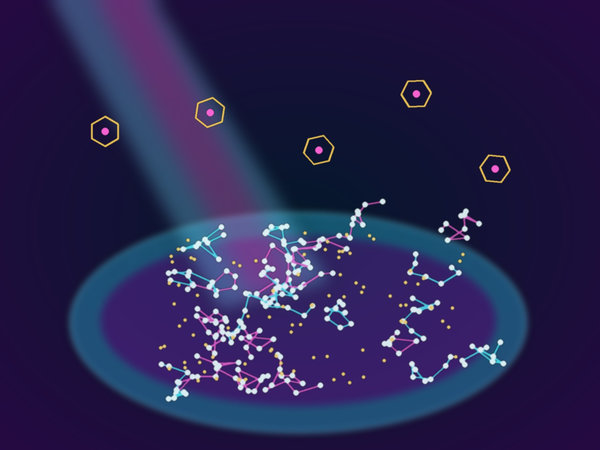 Figure 4. Visible-light activation of a photopolymer formulation containing sensitizer and co-initiator components.
 Figure 5. Tunable optical materials supplied in forms suited to solution processing and formulation development.
Standard materials are often the fastest route for initial screening, but specialized devices and formulations may need a more precise solution. Eata Energy can evaluate custom requests for new or modified photosensitizers, ligands, co-initiators, passivation molecules, interface modifiers, and multi-component additive packages. Customization may target a shifted absorption maximum, stronger visible-light response, improved solubility, reduced aggregation, alternative counterions, new anchoring groups, enhanced hydrophobicity, controlled molecular weight, or compatibility with a particular solvent and substrate.
Customers may also request non-standard purity, analytical testing, concentration, packaging, or formulation format. Sharing the intended application, light source, solvent or resin, target loading, substrate, and key performance objective allows our team to assess the most suitable route and prepare a focused proposal.
| Catalog Number | Product Name | Order | Quantity |
|---|---|---|---|
| SEMPA-0001 | BMIMTFSI Hydrophobic Ionic Liquid, ≥98% | Inquiry | |
| SEMPA-0002 | 2,2'-Biquinoline-4,4'-dicarboxylic Acid, 90% | Inquiry | |
| SEMPA-0003 | Ethyltriphenylphosphonium Iodide, ≥95% | Inquiry | |
| SEMPA-0004 | Guanidine Hydrochloride (GACl), CP, ≥98% | Inquiry | |
| SEMPA-0005 | Ethyltripropylammonium Iodide, >99% (T) | Inquiry | |
| SEMPA-0006 | Ethyltrimethylammonium Iodide, ≥98% | Inquiry | |
| SEMPA-0007 | Ruthenium Photosensitizers and Staining Additive for Dye Solar Cells | Inquiry | |
| SEMPA-0008 | Metal-Free Organic Photosensitizers and Staining Additive | Inquiry | |
| SEMPA-0009 | Ruthenium N3 Photosensitizer, 95% | Inquiry | |
| SEMPA-0010 | 4-tert-Butylpyridine Electrolyte Additive, 98% | Inquiry |
For Research or Industrial Raw Materials, Not For Personal Medical Use!
|
There is no product in your cart. |

Eata Energy is your trusted partner for high-performance energy materials, customized R&D support, and a stable global supply chain. We support you every step of the way in energy innovation.
Enter your E-mail and receive the latest news from us.
Copyright © Eata Energy. All rights reserved.
