
Cobalt occupies a unique position at the intersection of energy transition and advanced materials engineering. This hard, lustrous transition metal — atomic number 27, distinguished by its characteristic bluish-silver hue — serves as an irreplaceable constituent in lithium-ion battery cathodes, high-temperature superalloys, and hard magnetic materials. From the NMC cathode formulations powering electric vehicles to the single-crystal turbine blades operating in jet engines, cobalt's capacity to stabilize crystal structures and resist thermal degradation makes it indispensable across critical technology sectors.
Eata Energy supplies high-purity cobalt metal ranging from 99.6% to 99.99%+ (3N to 4N+) purity, available in powder, granules, ingots, sputtering targets, and custom-configured forms. Every batch is accompanied by full analytical documentation including ICP-MS trace element analysis, ensuring your research or process benefits from consistent, verifiable material quality.
Cobalt's unusual combination of ferromagnetism, high-temperature stability, and electrochemical activity explains its ubiquity across seemingly unrelated industries. The table below presents the essential physical and chemical characteristics relevant to research and industrial process design.
| Property | Value | Notes |
| Atomic Number | 27 | Transition metal, Group 9 |
| Atomic Weight | 58.93 g/mol | |
| Density | 8.9 g/cm³ | Near-room temperature |
| Melting Point | 1495°C | Higher than Ni, Fe, Cu |
| Boiling Point | 2870°C | |
| Curie Temperature | 1115°C | Highest of all elements |
| Crystal Structure | hcp / fcc | Allotropy at 417°C |
| CAS Number | 7440-48-4 | EINECS: 231-158-0 |
| UN Classification | UN 3089 | Class 4.1 (flammable solid) |
| Electronegativity | 1.88 (Pauling) |
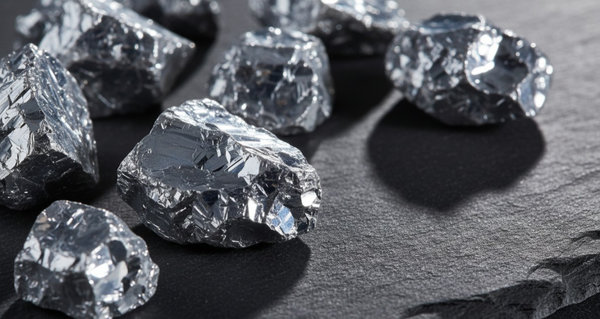 Figure 1: Crystalline high-purity cobalt chunks exhibiting the metal's characteristic bluish-silver luster
Two allotropes define cobalt's phase behavior: the hexagonal close-packed (hcp) α-phase, stable below 417°C, and the face-centered cubic (fcc) β-phase dominating at higher temperatures. This allotropy is harnessed in metallurgical processing to engineer specific grain structures for superalloy and magnetic applications. Cobalt retains ferromagnetism up to its Curie temperature of 1115°C — the highest of any elemental metal — a property exploited in high-temperature magnetic devices and recording media.
Eata Energy stocks cobalt across a comprehensive range of physical forms, each suited to distinct processing routes and research methodologies. Material is produced via electrolytic refining or carbonyl processes to achieve target purity grades.
Our cobalt powders serve as the starting material for cathode precursor synthesis, powder metallurgy compaction, and catalyst preparation. Spherical and irregular morphologies are available depending on the consolidation or chemical process requirements.
Granular cobalt formats facilitate master alloy additions, vacuum induction melting, and thermal spray deposition. The reduced surface-area-to-volume ratio compared with fine powder improves handling safety and minimizes oxidation during transfer operations.
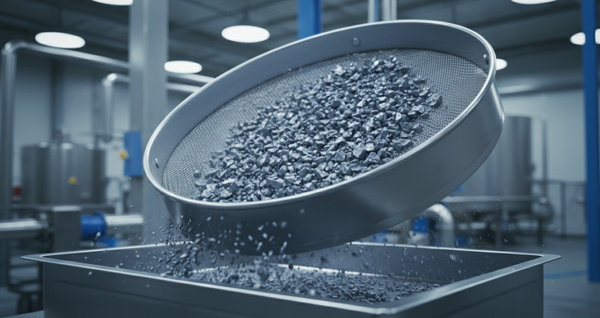 Figure 2: Cobalt metal granules being classified through a precision mesh sieve in a controlled environment
High-density sputtering targets enable thin-film deposition of cobalt and cobalt-alloy layers for magnetic recording media, spintronics devices, and protective coatings. Targets are hot-isostatically pressed to full density with controlled grain orientation.
For laboratory synthesis and prototype alloy development, we supply cobalt in wrought and cast solid forms. Electrolytic flake can be consolidated and processed to foil or rod upon request for specialized experimental setups.
Cobalt imparts structural stability and electronic conductivity to layered oxide cathodes, directly influencing cycle life, rate capability, and thermal safety. In NMC (LiNiₓMnₙCoₒO₂) formulations, cobalt's presence suppresses cation mixing and stabilizes the layered structure during repeated lithium extraction and insertion. For LiCoO₂ (LCO), cobalt is the sole transition metal, delivering the highest volumetric energy density among commercial cathodes — a decisive factor in portable electronics.
Eata Energy's battery-grade cobalt products are engineered with impurity profiles specifically controlled for cathode synthesis: iron, copper, and zinc kept below 10 ppm; sodium and calcium below 50 ppm. These thresholds minimize parasitic side reactions and capacity fade in full-cell configurations.
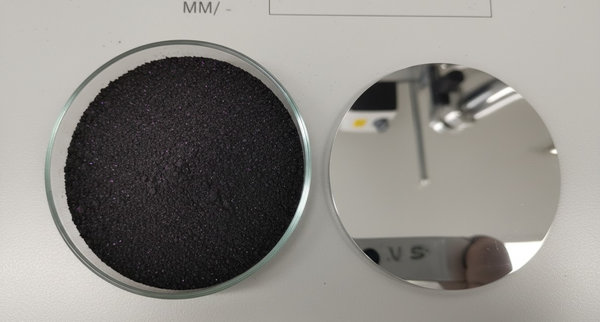 Figure 3: NMC cathode powder alongside a mirror-finish cobalt sputtering target for thin-film research
Cobalt-based superalloys — exemplified by compositions such as Haynes 188, L-605, and MP35N — exhibit superior thermal fatigue resistance and corrosion protection compared with nickel-based counterparts in certain turbine and combustor environments. Cobalt's role as a matrix element provides solid-solution strengthening and stabilizes the fcc phase against thermal cycling degradation. These alloys operate at temperatures exceeding 1000°C in aerospace propulsion systems, industrial gas turbines, and nuclear reactor components.
Samarium-cobalt (SmCo₅ and Sm₂Co₁₇) and aluminum-nickel-cobalt (Alnico) permanent magnets leverage cobalt's magnetic anisotropy and high Curie temperature to deliver exceptional coercivity and thermal stability. SmCo magnets retain useful magnetic output at temperatures above 300°C where NdFeB grades falter, making them essential for aerospace actuators, microwave tubes, and precision instrumentation. Our high-purity cobalt ensures consistent magnetic properties across magnet batches.
In tungsten carbide-cobalt (WC-Co) cemented carbides, cobalt serves as the binding matrix that wets and encapsulates carbide grains during liquid-phase sintering. The cobalt content — typically 3% to 30% by weight — governs toughness, hardness, and wear resistance. Ultrafine cobalt powders with controlled particle size distribution yield cemented carbides with submicron grain structures, enabling cutting tools and drilling inserts capable of machining hardened steels and superalloys.
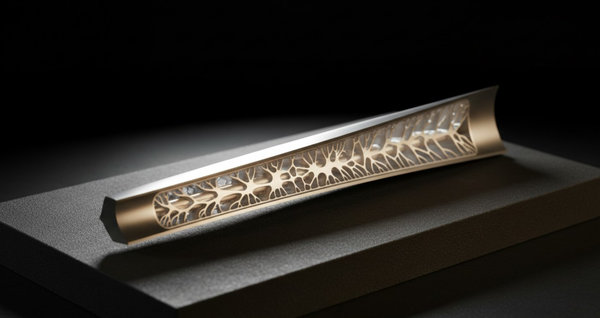 Figure 4: Intricate cobalt-based superalloy turbine blade with internal cooling channels
Cobalt catalysts facilitate hydrodesulfurization, Fischer-Tropsch synthesis, and selective oxidation reactions. Supported cobalt nanoparticles on alumina or silica supports serve as precursors to active Fischer-Tropsch catalysts for synthetic fuel production. In research contexts, Raney cobalt and cobalt phthalocyanine derivatives function as electrocatalysts for oxygen reduction and hydrogen evolution studies.
Selecting the appropriate purity grade balances analytical requirements against processing economics. The matrix below guides grade selection by application.
| Purity Grade | Characteristics | Recommended Applications |
| Co 99.6% | General research; Ni, Fe < 0.5% | Master alloy additions, superalloy melts, synthesis |
| Co 99.8% | Battery-grade; controlled Ni, Fe | NMC/NCA precursors, Co₃O₄ electrodes, hard magnets |
| Co 99.9% | Magnetic/analytical grade; <1000 ppm total metals | SmCo magnets, Mössbauer sources, primary standards |
| Co 99.99% | Semiconductor/medical; full trace control | PVD sputtering targets, spintronics, biomedical alloys |
Material consistency underpins reproducible research and process yield. Eata Energy certifies every cobalt batch through a multi-technique analytical protocol, with results compiled in a Certificate of Analysis delivered with each shipment.
All cobalt metal shipments include SDS documentation and UN 3089 (Class 4.1) transport classification for compliant global logistics. Material safety information and handling recommendations under inert atmosphere are available upon request.
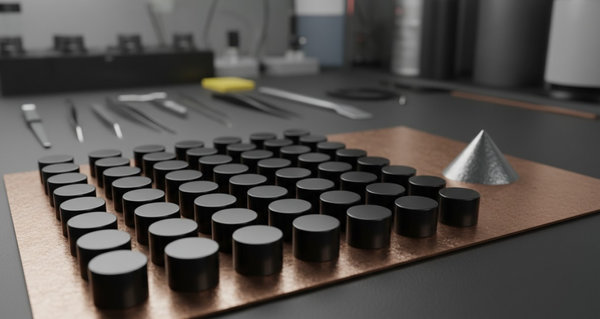 Figure 5: Cathode material pellets arranged on copper current collector foil for battery assembly
Standard catalog grades address common requirements, but frontier research and process development frequently demand bespoke material configurations. Eata Energy's technical team partners with your engineers to design and procure cobalt products outside routine offerings.
Initiate a technical consultation during your project planning phase to align material specifications with your performance targets and regulatory requirements.
| Catalog Number | Product Name | Order | Quantity |
|---|---|---|---|
| HPM-HPC-0001 | Extra-Coarse Spherical-Like Cobalt Powder | Inquiry | |
| HPM-HPC-0002 | Coarse Spherical-Like Cobalt Powder | Inquiry | |
| HPM-HPC-0003 | Medium Spherical-Like Cobalt Powder | Inquiry | |
| HPM-HPC-0004 | Fine Spherical-Like Cobalt Powder | Inquiry | |
| HPM-HPC-0005 | Ultrafine Spherical-Like Cobalt Powder | Inquiry | |
| HPM-HPC-0006 | Submicron Spherical-Like Cobalt Powder | Inquiry | |
| HPM-HPC-0007 | Single-Crystal Spherical Cobalt Powder | Inquiry | |
| HPM-HPC-0008 | Short-Rod Cobalt Powder | Inquiry | |
| HPM-HPC-0009 | Wax-Coated Granulated Cobalt Powder | Inquiry | |
| HPM-HPC-0010 | High-Purity Electrowon Cobalt Sheet | Inquiry |
For Research or Industrial Raw Materials, Not For Personal Medical Use!
|
There is no product in your cart. |

Eata Energy is your trusted partner for high-performance energy materials, customized R&D support, and a stable global supply chain. We support you every step of the way in energy innovation.
Enter your E-mail and receive the latest news from us.
Copyright © Eata Energy. All rights reserved.
