
Some materials fail loudly; most fail quietly — ground down by abrasion, softened by heat, or pitted by a corrosive stream. Cobalt-based alloys exist for exactly these battles. Built on a cobalt matrix fortified with chromium, tungsten, molybdenum and nickel, they hold their hardness, geometry and surface integrity long after conventional steels, and many nickel grades, have given up.
Eata Energy supplies cobalt-based alloy raw materials for research and industrial programs of every scale: gas-atomized spherical powders, cast and wrought bars, sheets and strips, hardfacing consumables, and precision sputtering targets. If your project fights wear, heat or corrosion, this is the material family worth specifying — and we are ready to help you specify it.
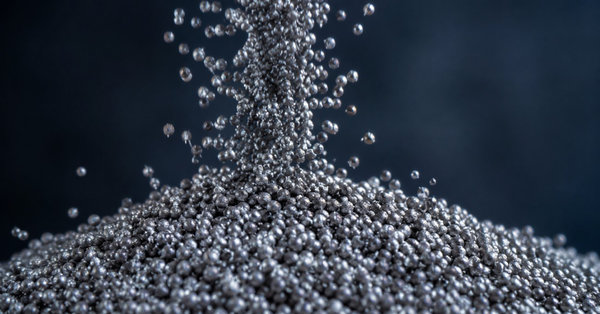 Spherical cobalt-based alloy powder prepared for additive manufacturing and thermal spray feedstock.
In a cobalt-based alloy, cobalt is not a minor addition — it is the foundation, typically the largest single constituent of the composition. Chromium, generally present at 20–30 wt%, builds a self-repairing Cr₂O₃ film that shields the surface from oxidation and hot corrosion. Tungsten and molybdenum dissolve into the matrix and pin the lattice against thermal softening, while carbon — tuned from trace levels in ductile wrought grades to several percent in hardfacing compositions — precipitates hard M₇C₃, M₆C and M₂₃C₆ carbides that give these alloys their legendary abrasion resistance. Nickel, where present, stabilizes the ductile face-centered cubic phase and improves toughness.
Few alloy systems pack so much into one material: resistance to abrasive, adhesive and erosive wear; strength that persists well past 800 °C; tolerance of sulfidizing, chloride-bearing and marine atmospheres; and — unlike many precipitation-hardened nickel superalloys — genuinely forgiving weldability. That combination explains why, decade after decade, engineers keep returning to cobalt alloys for valve trim, hot-section turbine hardware and cutting edges.
| Grade | Alloy System | Distinguishing Traits | Typical Uses |
| Stellite 6 (UNS R30006) | Co-Cr-W-C | The reference wear grade: balanced hardness, toughness and corrosion resistance; work-hardens in service | Valve seats, hardfacing overlays, cutting edges |
| Stellite 12 / 21 | Co-Cr-W(-Mo)-C | Higher-carbide Stellite 12 for severe abrasion; tougher, more corrosion-tolerant Stellite 21 | Wear plates, hot dies, pump components |
| CoCrMo (F75-type) | Co-Cr-Mo | Fine-grained cast or wrought structure combining high strength with excellent wear behavior | Precision castings, wear-critical components |
| Haynes 188 (UNS R30188) | Co-Ni-Cr-W-La | Oxidation resistance to about 1,095 °C with excellent fabricability and weld repairability | Combustor liners, transition ducts, afterburner hardware |
| Haynes 25 / L-605 (UNS R30605) | Co-Cr-W-Ni | High strength at intermediate temperatures with strong stress-rupture performance | Turbine vanes, high-temperature fasteners |
| MP35N (UNS R30035) | Ni-Co-Cr-Mo | Ultra-high strength up to about 2,070 MPa after work hardening and aging; non-magnetic | Aerospace fasteners, downhole tooling, springs |
| Tribaloy T-400 / T-800 | Co-Mo-Si | Laves-phase hardening for outstanding abrasion and corrosion resistance | Bearings, seal rings, wear pads |
| FSX-414 | Co-Cr-Ni | Cast grade with strong thermal-shock resistance and good weldability | Gas turbine nozzles, combustion hardware |
| MAR-M 509 | Co-Cr-Ni-Ta-Ti-Zr | Cast grade designed for structural strength in hot sections | Turbine vanes, static hot-section parts |
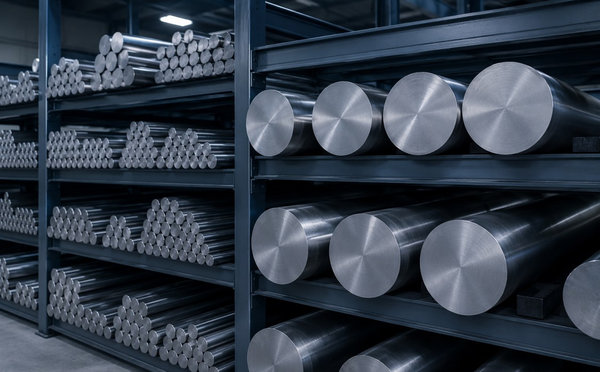 Cobalt-based superalloy bars and ingots, stocked in standard sizes and cut to order.
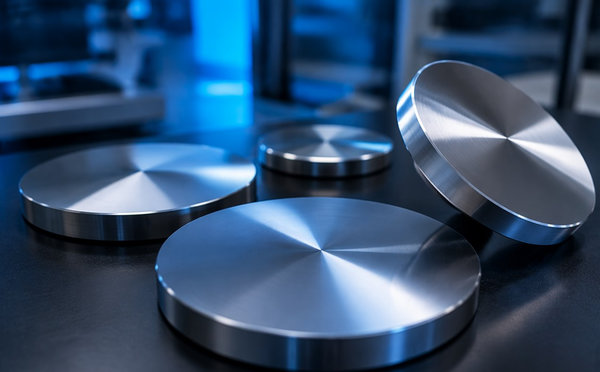 Mirror-polished cobalt alloy sputtering targets for thin-film and surface-engineering applications.
Customers frequently reach this page while searching for the materials below — every one of them is available for quotation:
Combustor liners, transition ducts, flame holders and vane platforms live in a punishing mix of heat, oxidation and thermal cycling. Cobalt grades such as Haynes 188 and L-605 are specified here precisely because hot-corrosion resistance, thermal fatigue endurance and weld repairability matter more in these parts than absolute creep strength.
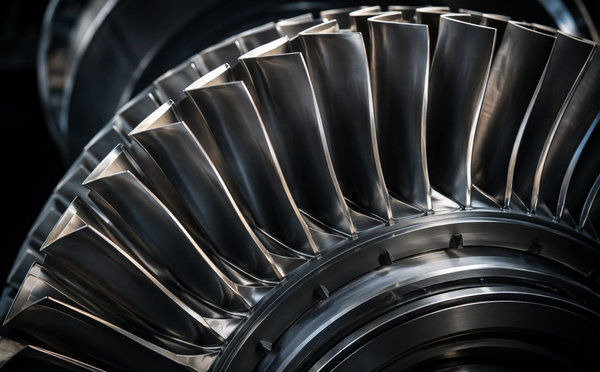 Turbine hot-section hardware remains a classic destination for cobalt-based superalloys.
Valve seats, gates, stems, cages, pump sleeves and bearings must survive galling, erosion and corrosive media at the same time. Stellite hardfacing and wrought cobalt components routinely outlast conventional alloys in sour and chloride-rich service, keeping unplanned shutdowns off the schedule.
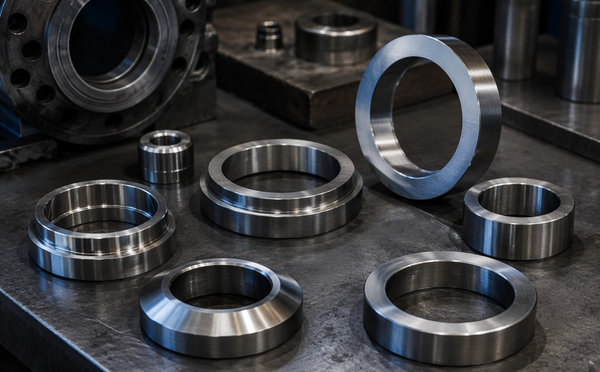 Valve seats and sealing rings machined from cobalt alloy resist galling and corrosive attack.
Cutting blades, extrusion and hot-forming dies, pelletizer knives, saw tips and wear strips all benefit from carbide-rich cobalt metallurgy that keeps its edge at temperature, cycle after cycle.
Spherical CoCrMo and Stellite-family powders feed SLM and EBM printers, laser cladding heads, and HVOF or plasma spray guns — opening the door to complex geometries and functionally graded wear surfaces that casting alone cannot deliver.
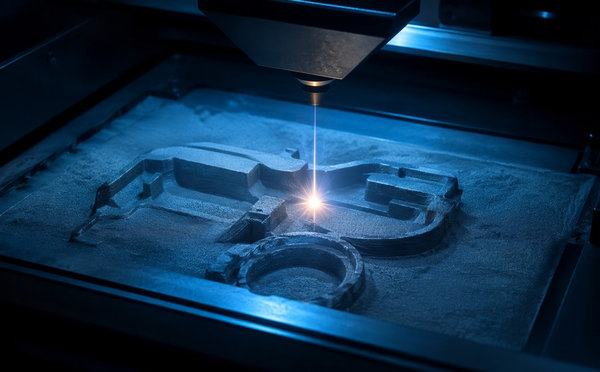 Laser powder bed fusion of cobalt alloy powder builds geometries beyond the reach of casting.
From hot-gas-path components in industrial gas turbines to the cobalt-chromium-molybdenum liners and nozzles now being qualified for hydrogen-fueled machines, cobalt alloys continue to support the equipment that keeps power systems running hotter, cleaner and longer.
Catalogue grades cover most needs — but not all. Eata Energy routinely adjusts chromium, tungsten and carbon windows to tune the balance of hardness and toughness, sieves powders to non-standard size distributions, fabricates sputtering targets in special geometries, and produces small trial melts for alloy development programs. Share your service conditions or your target specification, and our team will engineer a material route to match.
Ready to specify your cobalt alloy? Send us the grade, form and quantity you have in mind, and Eata Energy will reply with a technical proposal and a quotation tailored to your application.
| Catalog Number | Product Name | Order | Quantity |
|---|---|---|---|
| HPACBA-0001 | GH5188 | Inquiry | |
| HPACBA-0002 | CoCrMo Cobalt-Based Alloy Powder, 15–53 µm | Inquiry | |
| HPACBA-0003 | CoCrW Cobalt-Based Alloy Powder, Selectable Particle Size | Inquiry | |
| HPACBA-0004 | CoCrMoW Cobalt-Based Alloy Powder for Additive Manufacturing | Inquiry | |
| HPACBA-0005 | 99.9% Co-Fe-B Nanostructured Magnetic Sputtering Target | Inquiry | |
| HPACBA-0006 | 99.5% Ce-Co Nanodispersion Nuclear-Protection Sputtering Target | Inquiry | |
| HPACBA-0007 | 99.5% Ce-10-30Co Neutron-Absorbing Sputtering Target | Inquiry | |
| HPACBA-0008 | 99.9% Gadolinium-Cobalt Rare-Earth Alloy Sputtering Target | Inquiry | |
| HPACBA-0009 | 99.9% Co-Fe-10-30B High-Anisotropy Magnetic Sputtering Target | Inquiry | |
| HPA-QCY-0093 | Aluminum Cobalt Alloy | Inquiry |
For Research or Industrial Raw Materials, Not For Personal Medical Use!
|
There is no product in your cart. |

Eata Energy is your trusted partner for high-performance energy materials, customized R&D support, and a stable global supply chain. We support you every step of the way in energy innovation.
Enter your E-mail and receive the latest news from us.
Copyright © Eata Energy. All rights reserved.
