
Eata Energy supplies water-soluble quantum dots for advanced materials research, aqueous formulation development, optical studies, sensing platforms, photocatalysis, and energy-related applications. Our portfolio is designed to help customers evaluate tunable nanoscale emitters without relying on hydrophobic processing media, making it easier to incorporate quantum dots into water-based experimental systems, coatings, inks, composites, and functional interfaces.
Water dispersibility is created through carefully selected hydrophilic ligands, polymer coatings, silica shells, or oxygen-rich surface groups. These surface-engineering routes influence colloidal stability, charge, hydrodynamic size, coupling chemistry, and compatibility with the surrounding matrix. Eata Energy can help match the nanocrystal composition and surface treatment to the intended solvent system and downstream process.
Quantum dots are valued for size- and composition-dependent electronic structures, broad absorption profiles, and adjustable photoluminescence. When these nanocrystals are converted into stable aqueous dispersions, they can be processed through methods that are difficult to use with oil-soluble materials. Water-based mixing, dip coating, spray coating, printing, hydrogel incorporation, membrane modification, and interface assembly become more accessible, depending on the selected quantum dot and formulation conditions.
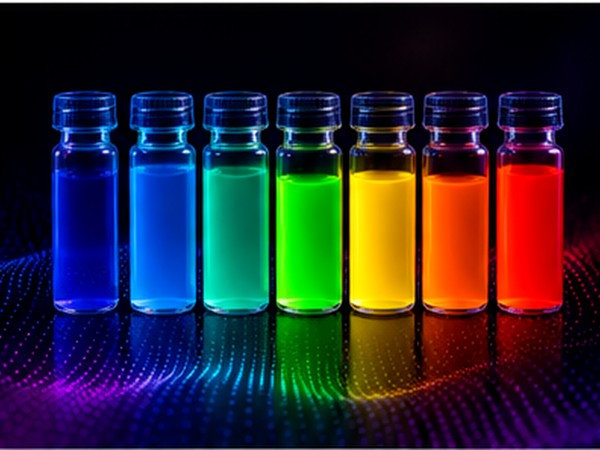 Aqueous quantum-dot dispersions can be formulated across multiple emission colors.
The following material families represent commonly requested categories. Exact availability, emission behavior, concentration, and surface chemistry should be confirmed for each project because aqueous conversion can affect particle dimensions and optical performance.
| Product Family | Typical Water-Compatible Surface | Material Characteristics | Typical Research Directions |
| CdSe/ZnS core/shell quantum dots | Carboxyl, amino, PEG/polymer, mercapto-acid or silica-compatible surfaces | Size-tunable visible emission; core/shell passivation supports optical stability | Fluorescent materials, aqueous inks, sensor development, optical assemblies |
| CdTe and CdTe-based quantum dots | Thiol-containing ligands such as carboxyl-terminated surface treatments | Frequently prepared or transferred into aqueous media; adjustable visible photoluminescence | Chemical sensing, luminescent coatings, photocatalytic studies |
| InP/ZnS quantum dots | Hydrophilic polymer or ligand coatings; selected functional end groups | Cadmium-free semiconductor option with composition- and size-dependent emission | Optoelectronic research, display materials, water-compatible composites |
| CuInS2/ZnS and related I-III-VI quantum dots | Polymer, PEG, thiol or amphiphilic encapsulation routes | Broad emission profiles and adaptable surface chemistry | Light harvesting, luminescent composites, sensing and interface studies |
| ZnS and doped ZnS nanocrystals | Glutathione, mercapto-acids or other water-compatible ligands | Wide-bandgap hosts with dopant- or defect-related emission options | Photocatalysis, UV-excited luminescence, chemical sensor research |
| Carbon quantum dots | Oxygen-rich, nitrogen-containing, amino or carboxyl surfaces | Often intrinsically water dispersible; optical response depends on core and surface states | Photocatalysis, electrocatalysis support, sensing, functional coatings |
| Graphene quantum dots | Edge carboxyl, hydroxyl, amino or doped surface groups | Water compatibility from edge functionality with useful photoelectronic properties | Energy conversion, photodetection, sensing and composite modification |
 Hydrophilic surface engineering supports nanoscale dispersion in water-based systems.
The surface layer is not simply a solubility aid; it is a key part of quantum-dot performance in water. Short thiol ligands can provide compact hydrodynamic dimensions but may respond strongly to pH, ionic strength, and oxidation. Amphiphilic polymer coatings can improve robustness and provide multiple functional groups, although they increase the overall particle size. Silica encapsulation offers a chemically versatile outer shell and can help isolate the semiconductor surface from the surrounding medium. Carbon and graphene quantum dots typically rely on oxygen- or nitrogen-containing groups located at their surfaces and edges.
Common surface and formulation choices include:
| Specification | Options to Confirm | Why It Matters |
| Material composition | Core, shell, alloy, dopant, or carbon-based structure | Determines band structure, emission behavior, and compatibility with the application |
| Emission requirement | Target color, wavelength region, spectral width, or excitation response | Helps narrow the particle size and composition |
| Surface functionality | COOH, NH2, PEG/polymer, hydroxyl-rich, silica, or project-specific ligand | Controls colloidal behavior and downstream interaction |
| Dispersion medium | Deionized water, selected buffer, or another polar medium | Affects stability, pH, ionic strength, and process compatibility |
| Concentration basis | Nanocrystal concentration, mass concentration, or optical-density target | Provides a practical basis for formulation and scale comparison |
| Particle and hydrodynamic size | Core size, overall diameter, or DLS profile | Important for transport, film formation, and composite integration |
| Surface charge | Positive, negative, or near-neutral preference | Influences adsorption, aggregation, and interaction with matrices |
| Characterization package | UV-Vis, photoluminescence, TEM, DLS, zeta potential, FTIR, XPS, or other tests | Aligns the supplied data with the intended research workflow |
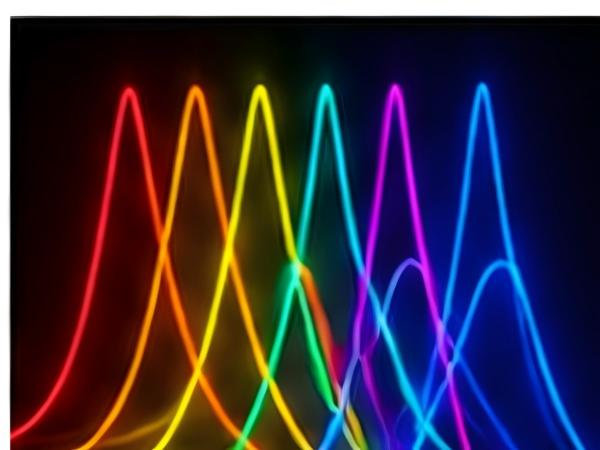 Composition and particle dimensions enable tunable photoluminescence across selected spectral regions.
Water-soluble quantum dots can be used as solution-processable light absorbers, sensitizers, interfacial modifiers, or luminescent components in experimental solar-energy systems. Their aqueous compatibility may support low-solvent processing routes, deposition onto hydrophilic oxides, and blending with water-dispersible conductive or polymeric materials. Material selection should consider band alignment, charge-transfer behavior, surface-ligand length, and post-deposition treatment.
 Quantum-dot materials are studied for light harvesting and photoelectronic energy conversion.
Semiconductor quantum dots, carbon dots, and graphene quantum dots are widely investigated as photosensitizers, charge-transfer mediators, electron reservoirs, or active photocatalytic components. In aqueous systems they may be combined with TiO2, ZnO, graphitic carbon nitride, metal oxides, sulfides, porous supports, or co-catalysts. The most suitable material depends on the light source, redox target, band alignment, surface chemistry, and required resistance to the reaction environment.
 Aqueous quantum dots can participate in photocatalytic and interfacial charge-transfer research.
Water-dispersible quantum dots can be evaluated for inkjet printing, spray coating, dip coating, casting, and layer-by-layer assembly. Formulation work typically considers surface tension, viscosity, particle concentration, substrate wetting, film uniformity, ligand retention, and optical changes after drying. Custom concentration and surface modification can help optimize compatibility with the selected binder or substrate.
Surface-accessible quantum dots can respond to ions, gases, pH, redox species, humidity, temperature, or molecular adsorption through changes in photoluminescence intensity, wavelength, or lifetime. Carboxyl, amino, hydroxyl, and doped carbon surfaces provide different interaction pathways. Sensor design should distinguish between desired analyte response and nonspecific effects caused by ionic strength, pH, or aggregation.
Aqueous nanodots may be incorporated into polymers, hydrogels, sol-gel systems, porous membranes, oxide films, conductive networks, and catalytic supports. Stable dispersion before mixing is essential, but final performance also depends on drying, matrix chemistry, interparticle distance, and whether the ligand shell supports or obstructs charge transport.
Reliable product selection requires more than an emission color. Eata Energy can provide available characterization information based on the material and project specification. Common analytical items include:
Because ligand exchange and encapsulation can alter optical and colloidal properties, specifications should be interpreted for the final water-soluble product rather than assumed from an oil-soluble precursor. Testing the material in the customer's actual matrix is recommended for formulation-sensitive applications.
Ph and ionic strength: Electrostatic stabilization may decrease in concentrated salts or at pH values that reduce surface charge. Buffer composition should therefore be selected with the ligand chemistry in mind.
Light and oxygen exposure: Some quantum-dot surfaces are sensitive to prolonged illumination or oxidation. Use light-protective containers and follow the storage guidance supplied with the specific product.
Mixing sequence: Additives, polymers, surfactants, and metal ions can change colloidal stability. Small-scale compatibility trials are useful before preparing larger formulations.
Filtration and purification: Filter pore size, membrane chemistry, dialysis conditions, and centrifugal force may influence concentration or remove a fraction of larger coated particles.
Drying and redispersion: Not every aqueous quantum dot can be dried and fully redispersed. Request a redispersible powder only when that format has been specifically validated.
Eata Energy supports custom development when a standard aqueous quantum-dot dispersion does not match the project. Customization may include core or core/shell composition, emission region, particle dimensions, dopant selection, ligand exchange, polymer or silica encapsulation, terminal functional groups, surface charge, concentration, dispersion medium, pH range, purification method, and characterization package.
To prepare a focused quotation, customers can share the target application, preferred quantum-dot family, excitation and emission requirements, surface functionality, required medium, concentration basis, desired analytical data, and any matrix-compatibility constraints. Our team will use these details to identify a suitable standard material or propose a tailored water-soluble quantum dot configuration.
| Catalog Number | Product Name | Order | Quantity |
|---|---|---|---|
| QDMWSQD-0001 | Graphene Quantum Dots (liquid) | Inquiry | |
| QDMWSQD-0002 | Graphene Quantum Dots, 7440-44-0 | Inquiry | |
| QDMWSQD-0003 | CdSe/ZnS Core-Shell Quantum Dots (λem 645 nm) | Inquiry | |
| QDMWSQD-0004 | CdSe/ZnS Core-Shell Quantum Dots (λem 620 nm, Water, Carboxylic acid functionalized) | Inquiry | |
| QDMWSQD-0005 | CdSe/ZnS Core-Shell Quantum Dots (λex 650 nm) | Inquiry | |
| QDMWSQD-0006 | CdSe/ZnS Core-Shell Quantum Dots (λem 540 nm, Water, Carboxylic acid functionalized) | Inquiry | |
| QDMWSQD-0007 | Cd-based Core-Shell Quantum Dots with Streptavidin (λem 525 nm) | Inquiry | |
| QDMWSQD-0008 | Cd-based Core-Shell Quantum Dots with Streptavidin (λem 450 nm) | Inquiry | |
| QDMWSQD-0009 | CdSe/ZnS Core-Shell Quantum Dots (λem 470 nm, amine) | Inquiry | |
| QDMWSQD-0010 | Tungsten Disulfide Quantum Dots | Inquiry |
For Research or Industrial Raw Materials, Not For Personal Medical Use!
|
There is no product in your cart. |

Eata Energy is your trusted partner for high-performance energy materials, customized R&D support, and a stable global supply chain. We support you every step of the way in energy innovation.
Enter your E-mail and receive the latest news from us.
Copyright © Eata Energy. All rights reserved.
