
Compound evaporation materials are the chemical source of many optical, electronic and energy-related thin films. When heated under vacuum, these solids generate a vapor that travels to the substrate and condenses as a functional coating. The material selected at the source can influence film composition, optical constants, electrical behavior, adhesion and process stability.
Eata Energy supplies compound materials for thermal evaporation, electron-beam evaporation and related physical vapor deposition workflows. We help customers compare chemistry, purity, physical form and evaporation behavior so the chosen material is better aligned with the intended film and deposition platform.
A compound source is not simply a chemical formula in a container. For vacuum deposition, the source should also be evaluated for cleanliness, density, gas release, tendency to spit, compatibility with the crucible or boat, and the way its components behave as temperature rises. Carefully selected granules, pellets or tablets can improve loading, heat transfer and rate control compared with poorly consolidated or highly dusty feedstock.
Some compounds sublime or evaporate with useful compositional stability. Others may dissociate or release their constituent elements at different rates. In those cases, co-evaporation, reactive deposition, composition compensation or an alternative source format may be more appropriate than assuming that the deposited film will exactly reproduce the bulk source composition.
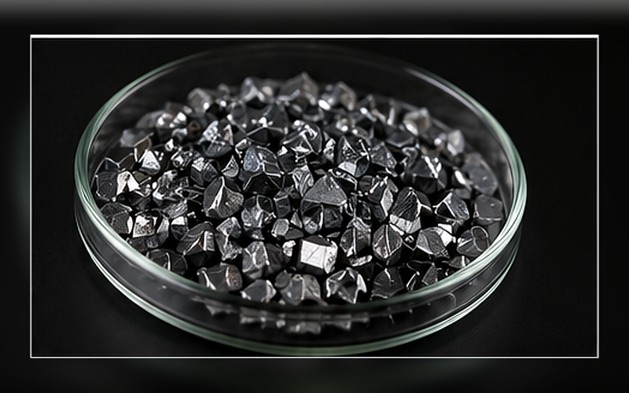 Fig. 1. Dense compound granules arranged as a clean source charge for vacuum deposition.
| Product Family | Representative Materials | Typical Film Functions |
| Oxide evaporation materials | Al2O3, SiO2, TiO2, ZrO2, HfO2, Ta2O5, Nb2O5, MoO3, WO3, ZnO, In2O3, ITO, AZO | Dielectric, optical, transparent-conductive and charge-transport layers |
| Fluoride evaporation materials | MgF2, AlF3, CaF2, LaF3, YF3, YbF3, CeF3, Na3AlF6 | Low-index, UV/IR, antireflection and specialty optical coatings |
| Sulfide evaporation materials | ZnS, MoS2, WS2, Sb2S3, SnS, SnS2, Bi2S3 | Optoelectronic, sensing, absorber, lubricant and functional semiconductor films |
| Selenide and telluride materials | ZnSe, MoSe2, WSe2, Sb2Se3, Bi2Se3, ZnTe, Sb2Te3, Bi2Te3 | Infrared, thermoelectric, phase-change and semiconductor research |
| Nitride, boride and carbide materials | AlN, BN, TiN, Si3N4, B4C, SiC and selected related compounds | Hard, thermal-management, diffusion-barrier and protective layers |
| Mixed oxides and functional ceramics | Barium strontium titanate, lithium niobate, lithium tantalate, spinel-type and doped oxide compositions | Dielectric, electro-optic, ferroelectric and application-specific functional films |
Source purity can affect absorption, conductivity, carrier transport, color, breakdown behavior and interfacial stability. For demanding films, the headline assay should be considered together with the trace-element profile, oxygen or moisture content, residual processing contamination and surface cleanliness. A useful specification is therefore application-led rather than limited to a single purity number.
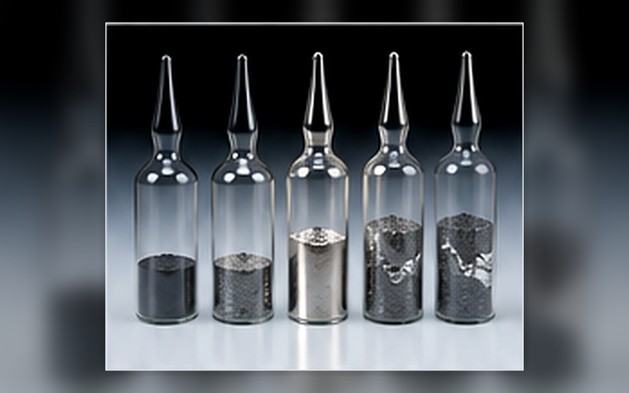 Fig. 2. Uniformly portioned compound source material prepared for repeatable evaporation trials.
Oxides and fluorides are widely used to build high-index and low-index layers for antireflection stacks, filters, mirrors, beam splitters and UV or infrared optics. Material selection is linked to refractive index, transparency range, absorption, packing density, stress and compatibility with substrate temperature or ion-assisted deposition.
Compound evaporation sources support dielectric layers, transparent conductive films, charge-transport layers, contacts, passivation coatings and selected semiconductor absorbers. They are relevant to displays, LEDs, photodetectors, sensors, integrated devices and thin-film research where thickness and interfacial control are important.
Vacuum deposition is used in the investigation and manufacture of photovoltaic absorbers, carrier-selective layers, buffer layers, protective coatings and battery-related interfaces. Single-source evaporation can simplify a process when the compound is stable, while co-evaporation offers independent control when stoichiometry must be tuned.
Selenide, telluride, sulfide and mixed-compound systems are studied for thermoelectric conversion, memory, sensing and infrared technologies. In these systems, small compositional changes can alter phase formation and electrical properties, making source quality and flux control particularly significant.
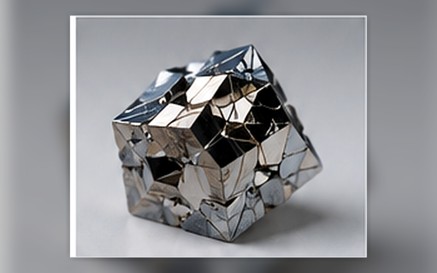 Fig. 3. Faceted compound material illustrating controlled solid-state composition and source form.
| Selection Factor | Why It Matters |
| Target film composition | Define the desired phase, dopant level, optical constant or electrical function rather than selecting by formula alone. |
| Deposition method | Confirm whether the material is intended for resistive heating, electron-beam evaporation, Knudsen-cell use, co-evaporation or reactive deposition. |
| Thermal behavior | Review melting, sublimation, decomposition and vapor-pressure behavior across the practical operating range. |
| Stoichiometry retention | Determine whether the source evaporates as a stable compound or whether constituent fluxes can separate. |
| Source form and dimensions | Match granule size, pellet diameter, tablet thickness or starter-source geometry to the holder and charge capacity. |
| Crucible and liner compatibility | Avoid reactions, wetting problems or contamination between the heated material and the source container. |
| Purity and critical impurities | Specify the trace elements, moisture, oxygen, carbon or residual contaminants that could affect the film. |
| Process targets | Share substrate type, deposition rate, thickness range, base pressure and any reactive-gas or substrate-heating conditions. |
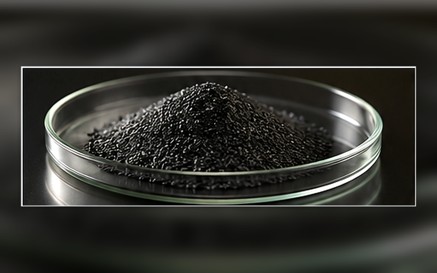 Fig. 4. Fine granular compound feedstock selected for stable loading and controlled heating.
Different equipment and materials call for different source forms. Eata Energy can evaluate the format that best fits the deposition platform and the way the compound responds to heating.
| Format | Process Value |
| Granules or pieces | Convenient loading, adaptable charge size and broad use in electron-beam pockets or crucibles. |
| Pellets and tablets | Defined geometry, useful packing density and reduced dust for repeatable charging. |
| Powders | Available for selected materials where fine feedstock is technically suitable and handling is controlled. |
| Starter sources | Preconditioned or shaped charge formats intended to simplify initial loading for selected systems. |
| Custom shapes and dimensions | Diameter, thickness, mass, particle range or geometry adjusted to compatible source hardware. |
Specifications vary widely across compound chemistries. Depending on technical feasibility and the selected product, Eata Energy can discuss controls that make the material more meaningful for the end process.
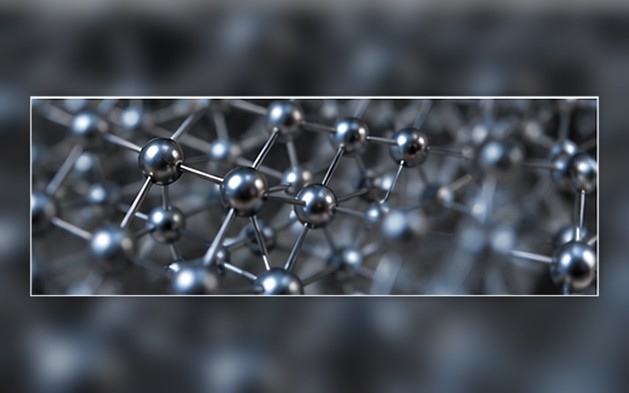 Fig. 5. Lattice-scale structure representing the formation of a functional compound thin film.
A standard grade may not fit every deposition system. Eata Energy can assess custom requirements for selected compound materials, subject to technical feasibility and the behavior of the chemistry during preparation and evaporation.
| Eata Energy Advantage | Customer Value |
| Materials-focused portfolio | Source compound evaporation materials across optical, semiconductor, functional-coating and energy-related applications. |
| Specification-led support | Compare purity, composition, form and deposition compatibility against the actual process requirement. |
| Flexible customization | Evaluate tailored chemistry, particle range, pellet dimensions and packaging for selected materials. |
| Clear technical communication | Build inquiries around the film target and source conditions so specifications are relevant and reviewable. |
| Catalog Number | Product Name | Order | Quantity |
|---|---|---|---|
| SEMCEM-0001 | Tungsten Disulfide Powder, ≥99.9%, 2 μm | Inquiry | |
| SEMCEM-0002 | Erbium Telluride Compound Evaporation Material (ErTe) | Inquiry | |
| SEMCEM-0003 | 99.999% Bismuth–Antimonide Topological Alloy Granules, Bi1−xSbx | Inquiry | |
| SEMCEM-0004 | Calcium Carbonate Compound Evaporation Granules (CaCO3) | Inquiry | |
| SEMCEM-0005 | 99.5% Titanium Nitride Hard-Coating Evaporation Granules (TiN) | Inquiry | |
| SEMCEM-0006 | 99.5% Boron Nitride Thermally Conductive Evaporation Granules (BN) | Inquiry | |
| SEMCEM-0007 | 99% Silicon Carbide Wide-Band-Gap Evaporation Rods (SiC) | Inquiry | |
| SEMCEM-0008 | 99.5% Tungsten Carbide Ultra-Hard Evaporation Granules (WC) | Inquiry | |
| SEMCEM-0009 | 99.5% Titanium Carbide Ultra-Hard Evaporation Granules (TiC) | Inquiry | |
| SEMCEM-0010 | 99.5% Tantalum Carbide Ultra-High-Temperature Evaporation Granules (TaC) | Inquiry |
For Research or Industrial Raw Materials, Not For Personal Medical Use!
|
There is no product in your cart. |

Eata Energy is your trusted partner for high-performance energy materials, customized R&D support, and a stable global supply chain. We support you every step of the way in energy innovation.
Enter your E-mail and receive the latest news from us.
Copyright © Eata Energy. All rights reserved.
