
Lithium stands apart as the lightest solid element in the periodic table, with a density merely 0.534 g/cm³ — roughly half that of water. This extraordinary lightness, paired with the lowest electrochemical potential of any metal (-3.04 V vs SHE) and an exceptional specific capacity (3860 mAh/g), makes metallic lithium the ultimate anode material for next-generation energy storage systems. At Eata Energy, we supply high-purity lithium metal meticulously characterized for researchers and industrial users pushing the boundaries of battery technology, materials science, and advanced synthesis.
Our lithium products span purity grades from 99.9% (3N) to 99.99% (4N) and beyond, available in diverse physical forms to match your exact experimental or process requirements. Every unit ships under inert atmosphere packaging with a comprehensive Certificate of Analysis, ensuring reproducibility from the moment you unbox.
Understanding lithium's intrinsic characteristics is essential for designing safe, reproducible experiments and processes. The table below summarizes the key physical and chemical properties relevant to research and industrial applications.
| Property | Value | Notes |
| Atomic Number | 3 | Lightest metal element |
| Molecular Weight | 6.94 g/mol | Lowest atomic weight of all metals |
| Density | 0.534 g/cm³ | ~50% lighter than water |
| Melting Point | 180.5°C | Relatively low, aids processing |
| Boiling Point | 1342°C | |
| Electrochemical Potential | -3.04 V vs SHE | Lowest of all metals |
| Specific Capacity | 3860 mAh/g | Highest theoretical capacity for anodes |
| CAS Number | 7439-93-2 | EINECS: 231-102-5 |
| UN Classification | UN 1415 | Class 4.3 (water-reactive) |
| Natural Isotopes | ⁷Li (92.6%), ⁶Li (7.4%) | ⁶Li: high neutron capture cross-section |
Naturally occurring lithium comprises two stable isotopes: ⁷Li (92.6% abundance) and ⁶Li (7.4% abundance). The ⁶Li isotope holds particular significance in nuclear research due to its high thermal neutron capture cross-section, while ⁷Li dominates battery-oriented applications. Enriched isotope grades are available on request for specialized research programs.
Different research protocols and manufacturing processes demand lithium in specific geometries and surface conditions. We maintain inventory across the full spectrum of standard and specialty configurations.
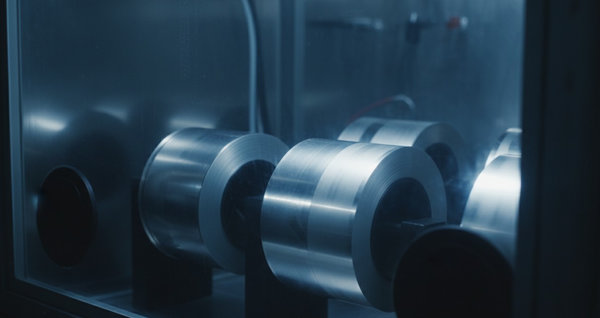 Figure 1: Ultra-thin lithium metal foil rolls prepared under inert atmosphere for battery assembly
Our lithium foil represents the most widely requested format for battery research. Rolled to precise thickness tolerances under argon atmosphere, these foils provide consistent anode material for coin cell, pouch cell, and custom electrochemical cell assembly.
Ribbon and wire configurations serve organic synthesis, deposition experiments, and specialized battery geometries where foil is impractical. Drawn to uniform cross-section with minimal surface oxide.
Cast ingots and extruded rods provide feedstock for in-house rolling, machining, or alloying operations. Supplied with as-cast or machined surfaces, packed under mineral oil or inert gas.
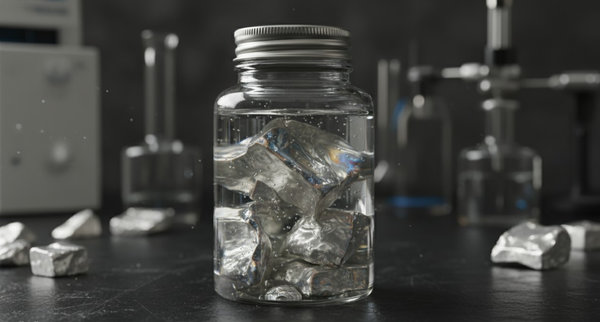 Figure 2: Lithium metal chunks stored under protective mineral oil in a laboratory glass container
For applications demanding high surface area or uniform distribution, we supply lithium powder and stable dispersions. These formats accelerate reaction kinetics and simplify material handling in continuous processes.
The global race toward solid-state batteries hinges on metallic lithium as the definitive anode material. With a theoretical specific capacity ten times that of conventional graphite, lithium metal anodes promise energy densities exceeding 500 Wh/kg when paired with advanced solid electrolytes. Our high-purity lithium foils and alloy-grade materials support R&D programs targeting lithium-sulfur, lithium-air, and ceramic-electrolyte solid-state architectures. Researchers benefit from our tight thickness control and low surface roughness, both critical for achieving uniform lithium plating and stripping across cycle life testing.
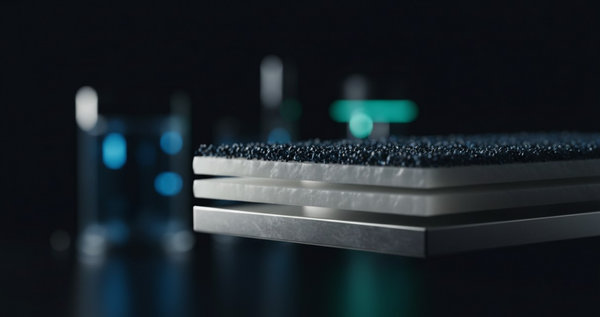 Figure 3: Layered solid-state battery cell architecture with metallic lithium anode
Adding lithium to aluminum yields alloys with remarkable reductions in density (up to 8% lighter than conventional aluminum) while simultaneously increasing elastic modulus and fatigue resistance. These properties position Al-Li alloys as essential materials for aerospace structural components, satellite frameworks, and lightweight transportation systems. We supply lithium ingot and master alloy compositions optimized for induction melting and direct chill casting processes.
Lithium's potent reducing capability makes it indispensable in organolithium chemistry — from butyllithium production to stereoselective reductions of hindered ketones and reductive cleavage of polar bonds. High-purity lithium with controlled surface morphology delivers predictable reaction kinetics and consistent yields in multi-step synthesis workflows.
Non-rechargeable thermal batteries utilizing lithium anodes and molten salt electrolytes remain the power source of choice for military ordnance, aerospace emergency systems, and downhole drilling tools. Our lithium materials meet the rigorous purity and dimensional tolerances demanded by these mission-critical applications.
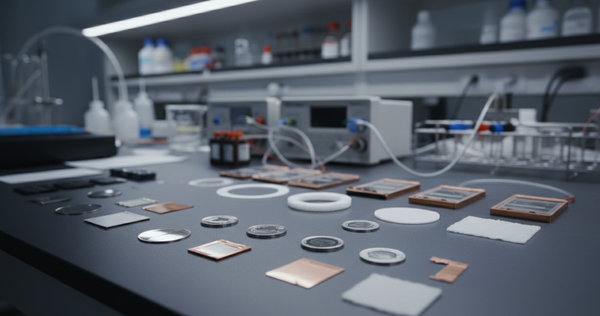 Figure 4: Electrochemical cell components and lithium metal anodes arranged for battery assembly
Traceability and characterization define our approach to lithium metal supply. Each production lot undergoes multi-technique analysis before release, with results documented in a comprehensive Certificate of Analysis shipped with every order.
Standard documentation includes material safety data sheet (SDS), handling guidelines under inert atmosphere, and UN 1415 (Class 4.3) transport classification for compliant logistics worldwide.
Eata Energy recognizes that breakthrough research rarely conforms to catalog standards. Our engineering team collaborates directly with clients to define, source, and validate bespoke lithium configurations that standard offerings cannot address.
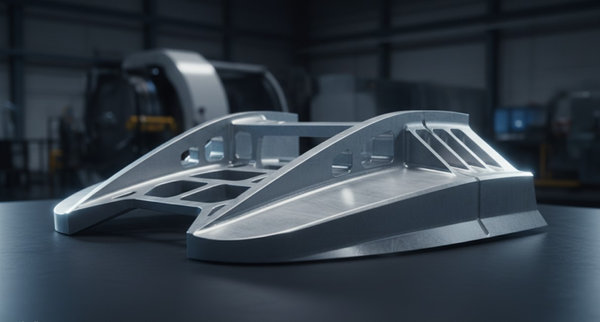 Figure 5: Precision-machined aluminum-lithium alloy structural component for aerospace applications
Engage our materials scientists during your project scoping phase to optimize lithium selection for your specific electrochemical system, alloy target, or synthesis protocol.
| Catalog Number | Product Name | Order | Quantity |
|---|---|---|---|
| HPM-HPL-0011 | Lithium Metal Pellets, 4 mm × 4–7 mm | Inquiry | |
| HPM-HPL-0012 | Lithium Metal Pellets, 6 mm × 6–10 mm | Inquiry | |
| HPM-HPL-0013 | Lithium Metal Rod, ≥96.5% | Inquiry | |
| HPM-HPL-0014 | Lithium–Aluminum Alloy Strip, 0.10 wt% Al | Inquiry | |
| HPM-HPL-0015 | Lithium–Aluminum Alloy Strip, 0.17 wt% Al | Inquiry | |
| HPM-HPL-0016 | Lithium–Aluminum Alloy Strip, 0.30 wt% Al | Inquiry | |
| HPM-HPL-0017 | Lithium–Aluminum Alloy Strip, 0.50 wt% Al | Inquiry | |
| HPM-HPL-0018 | High-Purity Lithium Metal Strip, ≥99.9% | Inquiry | |
| HPM-HPL-0019 | High-Purity Lithium Metal Ingot, 99.9% | Inquiry | |
| HPM-HPL-0020 | Ultra-Thin Lithium Metal Foil, 20–100 μm | Inquiry |
For Research or Industrial Raw Materials, Not For Personal Medical Use!
|
There is no product in your cart. |

Eata Energy is your trusted partner for high-performance energy materials, customized R&D support, and a stable global supply chain. We support you every step of the way in energy innovation.
Enter your E-mail and receive the latest news from us.
Copyright © Eata Energy. All rights reserved.
