
Tellurium may be one of the rarest stable elements in Earth's crust, yet its compounds punch far above their weight. Cadmium telluride films produce roughly 5% of the world's solar electricity, bismuth telluride alloys sit at the heart of every solid-state cooler, and mercury cadmium telluride focal planes give satellites and thermal cameras their vision in the dark.
Eata Energy supplies high-purity telluride materials in the forms that research and production actually consume: semiconductor-grade powders and granules, zone-refined thermoelectric ingots, Bridgman-grown single crystals, sputtering targets, and detector-grade substrates. Every batch leaves with a full chemical analysis certificate.
 Zone-refined bismuth telluride ingots, sliced and ready for thermoelectric module production
Tellurides are compounds of tellurium — the heaviest of the common chalcogens — bonded to less electronegative elements. Compared with sulfides and selenides, the tellurium atom pushes band gaps narrower, carrier mobilities higher, and spin–orbit coupling stronger. The result is a family with outsized personalities: the best room-temperature thermoelectrics known, the benchmark infrared detector alloy, and a glass-forming composition that switches between amorphous and crystalline states in nanoseconds — the basis of phase-change memory.
| Material | Formula | Band Gap | Typical Applications |
| Cadmium Telluride | CdTe | 1.45 eV | Thin-film solar cells, radiation detectors |
| Bismuth Telluride | Bi₂Te₃ | ~0.15 eV | Peltier coolers, topological insulators |
| Lead Telluride | PbTe | 0.31 eV | Mid-temperature thermoelectric generators |
| Mercury Cadmium Telluride | Hg₁₋ₓCdₓTe | tunable | Infrared focal-plane arrays, thermal imaging |
| Cadmium Zinc Telluride | Cd₁₋ₓZnₓTe | 1.4–2.2 eV | Room-temperature X-ray and gamma detectors |
| GST (Phase-Change Alloy) | Ge₂Sb₂Te₅ | — | PCRAM, rewritable optical storage |
| Zinc Telluride | ZnTe | 2.26 eV | THz generation/detection, solar back contacts |
| Antimony Telluride | Sb₂Te₃ | ~0.3 eV | p-type thermoelectrics, topological research |
| Tin Telluride | SnTe | ~0.2 eV | Thermoelectrics, topological crystalline insulator |
| Germanium Telluride | GeTe | ~0.6 eV | Phase-change alloys, ferroelectric Rashba |
| Molybdenum Ditelluride | MoTe₂ | ~1.1 eV (ML) | 2D electronics, phase-engineered devices |
| Tungsten Ditelluride | WTe₂ | semimetal | Weyl physics, giant magnetoresistance |
Band gaps are bulk room-temperature values unless noted; MCT and CZT gaps vary with alloy composition.
CdTe is the most successful thin-film solar technology ever commercialized — second only to crystalline silicon in deployment, with more than 20 GW installed worldwide. Its recipe is hard to beat: a 1.45 eV direct gap, 99% of sunlight captured within a couple of micrometers, and factory lines that finish a panel in hours. Certified laboratory cells reached 22.1% with CdSeTe-graded absorbers, arsenic-doped devices have posted 22.3%, and research cells are now pressing toward 23%. Modern modules also deliver the shortest energy payback time and one of the smallest carbon footprints of any photovoltaic technology. ZnTe plays a supporting role here too, as the standard back-contact layer in high-efficiency CdTe device stacks.
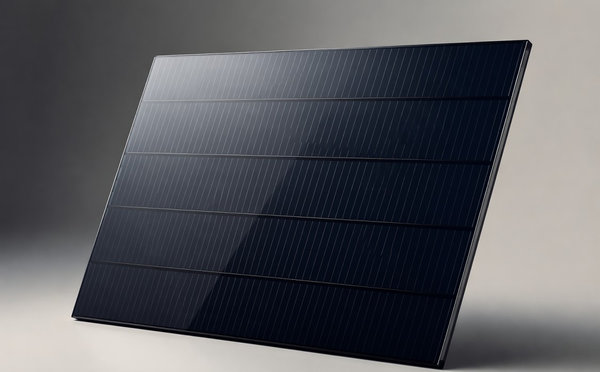 Cadmium telluride thin-film modules — the second most deployed solar technology
Two tellurides anchor the thermoelectric industry. Around room temperature, Bi₂Te₃-based alloys remain unbeaten after six decades: they drive Peltier coolers in laser-diode temperature control, medical analyzers, car seat cooling and portable refrigeration. Between 600 and 900 K, PbTe takes over — a material with genuine space heritage, having powered the SNAP generators of the 1960s and still flying in today's multi-mission RTGs. Doping strategies keep rewriting its records: Na-doped PbTe at ZT ≈ 1.4, Tl-resonant-level alloys at 1.5, band-converged compositions at 1.8, and PbTe–SrTe composites at 2.2. SnTe, GeTe and AgSbTe₂ round out the family for specialized temperature windows.
 Bi₂Te₃-based Peltier modules for solid-state cooling
When image quality in the infrared cannot be compromised, the default answer is mercury cadmium telluride. Adjusting the Hg₁₋ₓCdₓTe alloy composition slides the band gap continuously, giving detectors tailored from short-wave infrared out to cut-offs beyond 14 μm, with very long-wavelength devices reaching detectivities near 2.5×10¹¹ Jones. Three generations of MCT focal-plane arrays now serve astronomy, earth observation, gas sensing and medical thermography. A sister alloy, CdZnTe, detects X-rays and gamma rays at room temperature without cryogenic cooling — enabling compact spectrometers for security screening, nuclear medicine and space telescopes.
Few materials have carried a data-storage technology on their shoulders the way Ge₂Sb₂Te₅ has. Sitting on the GeTe–Sb₂Te₃ tie-line, GST crystallizes in nanoseconds, switches reliably over billions of cycles, and shows a resistance contrast of several orders of magnitude between its amorphous and crystalline states. It first powered rewritable DVDs, then crossed into silicon as phase-change RAM — most visibly in 3D XPoint memory — where demonstrations have reached 6 ns set speeds and even sub-nanosecond operation with engineered interfaces. Doped derivatives (N-, C-, Zn-doped GST and Sb₂Te₃) and neuromorphic synaptic arrays keep this material family at the center of storage-class memory research.
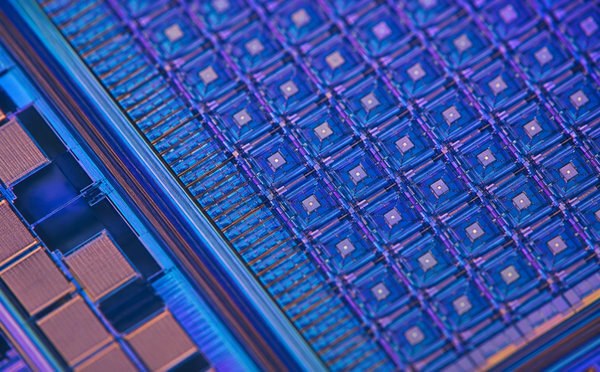 Ge₂Sb₂Te₅ phase-change memory arrays switch between amorphous and crystalline states
Oriented <110> zinc telluride crystals are the workhorse of terahertz time-domain spectroscopy. A femtosecond pulse passing through ZnTe emits a broadband terahertz transient by optical rectification; a second crystal reads the same field through electro-optic sampling. With a 2.26 eV band gap, transparency from 0.62 to 20 μm and strong photorefractive response between 600 and 1300 nm, ZnTe also serves in optical limiting, holographic interferometry and mid-infrared frequency conversion.
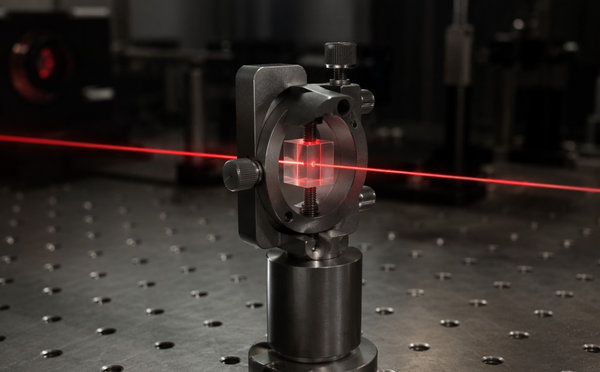 A <110> ZnTe crystal generating and detecting terahertz pulses on an optical bench
Tellurides keep opening doors in fundamental physics. Bi₂Te₃ and Sb₂Te₃ are the canonical three-dimensional topological insulators; SnTe realizes a topological crystalline insulator; WTe₂ hosts type-II Weyl fermions and an extremely large, non-saturating magnetoresistance; and MoTe₂ can be coaxed between semiconducting 2H and semimetallic 1T' phases within a single device concept. FeTe and its selenium-alloyed derivatives add unconventional superconductivity to the list. Progress in all of these areas begins with stoichiometric, defect-poor crystals — grown by vapor transport, flux or Bridgman methods from high-purity starting materials.
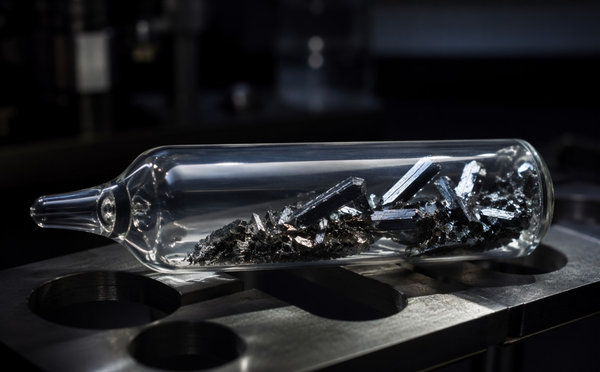 Vapor-transport-grown telluride crystals sealed in a quartz ampoule
Telluride devices are unforgiving of contamination: trace copper or oxygen can shift carrier concentration enough to ruin a detector or drag a ZT value below spec. Eata Energy refines tellurium up to 7N and compounds it under tightly controlled conditions, so every ingot, powder and target ships with the purity your process window assumes — verified by ICP-MS or GDMS on each lot.
Catalog compositions are only the starting point. We routinely prepare custom alloys — Bi₂₋ₓSbₓTe₃ and Pb₁₋ₓSnₓTe across the full range, Cd₁₋ₓZnₓTe at your specified x, off-stoichiometry GeSbTe compositions — together with doped variants using Na, Tl, I, Cl or N. Target fabrication and bonding, oriented crystal slicing, wafer polishing and small-batch zone refining are all available. Tell us the specification; we will come back with a technical proposal, not just a quotation.
| Catalog Number | Product Name | Order | Quantity |
|---|---|---|---|
| CHATEL-0001 | Tellurium, 99.999% (5N) | Inquiry | |
| CHATEL-0002 | Tellurium Ingot, 99.99% (4N) | Inquiry | |
| CHATEL-0003 | Lead Telluride Crystals and Lumps 99.998% Trace Metals Basis | Inquiry | |
| CHATEL-0004 | Zinc Telluride Powder 99.99% Trace Metals Basis | Inquiry | |
| CHATEL-0005 | Silver Telluride Powder and Chunks | Inquiry | |
| CHATEL-0006 | Sodium Tellurite Powder 97% | Inquiry | |
| CHATEL-0007 | Cadmium Telluride Powder 99.99% Trace Metals Basis | Inquiry | |
| CHATEL-0008 | Potassium Tellurite ACS Reagent Grade | Inquiry | |
| CHATEL-0009 | Bismuth Telluride Powder 99.99% Trace Metals Basis −325 Mesh | Inquiry | |
| CHATEL-0010 | Tungsten Ditelluride Powder 99.9999% Trace Metals Basis | Inquiry |
For Research or Industrial Raw Materials, Not For Personal Medical Use!
|
There is no product in your cart. |

Eata Energy is your trusted partner for high-performance energy materials, customized R&D support, and a stable global supply chain. We support you every step of the way in energy innovation.
Enter your E-mail and receive the latest news from us.
Copyright © Eata Energy. All rights reserved.
